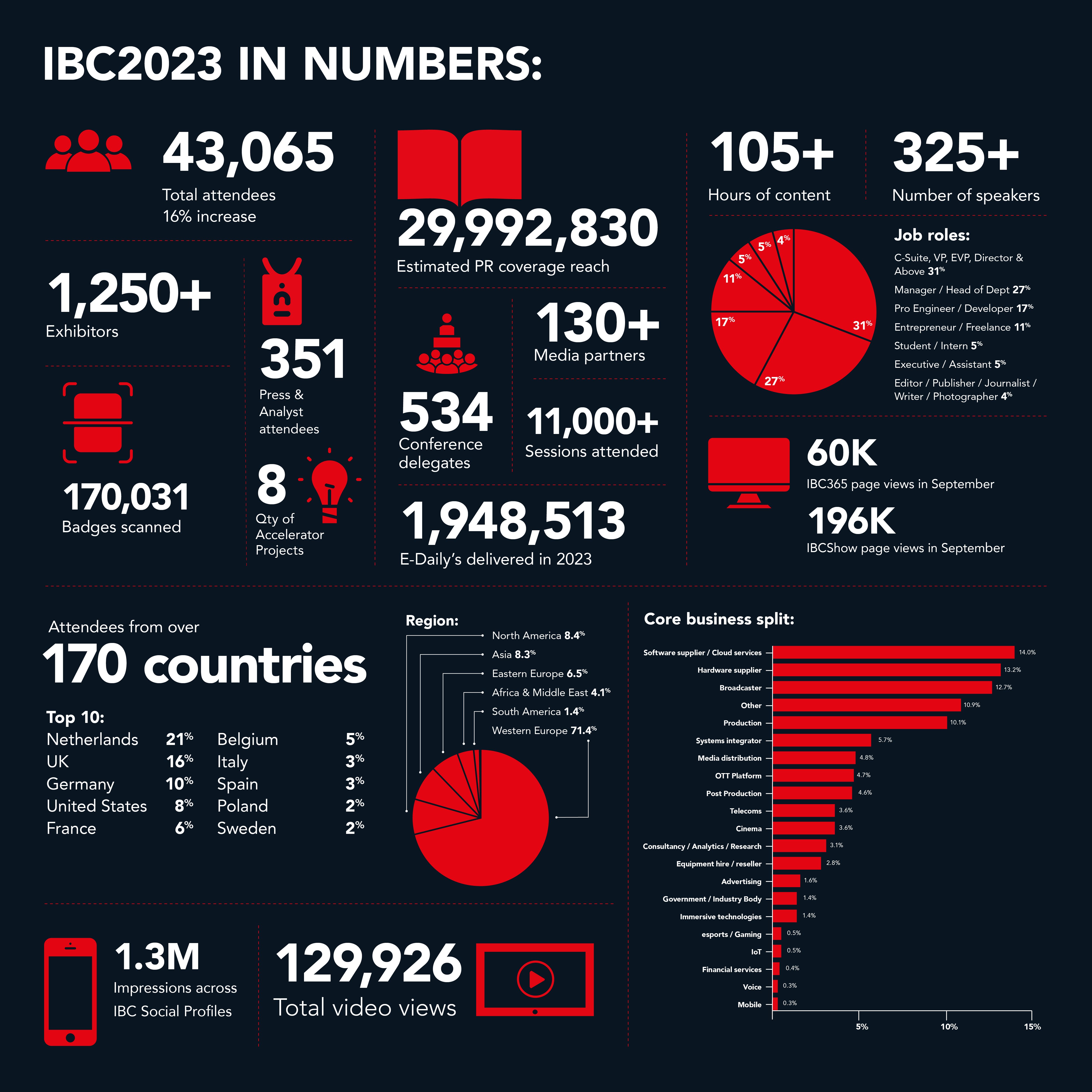
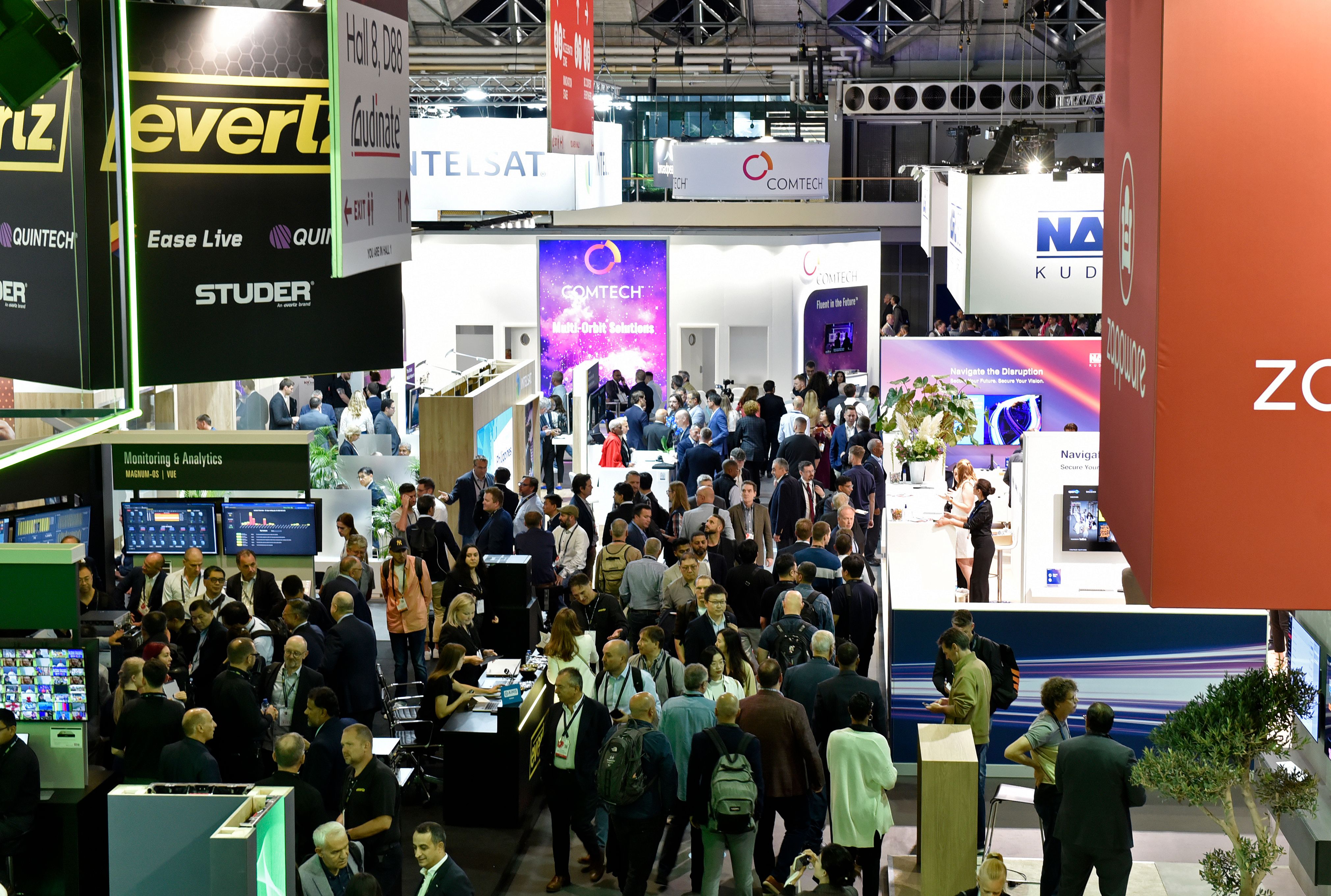
IBC2023 attracted 43,065 attendees from 170 countries, celebrating business innovation and pushing new boundaries in media technology. With over 1,250 exhibitors and a 16% increase in total attendees, media leaders and technology pioneers from around the world gathered across bustling exhibition halls, buzzing networking events and packed theatres to define and action the future of media and entertainment.
“We’ve seen a fantastic turnout from the entire industry at IBC2023,” said Michael Crimp, IBC’s Chief Executive Officer. “There was a real sense of purpose at the show as business leaders and tech innovators came together to help our industry navigate change and build a better future for media and entertainment. I’d like to thank everyone for the ongoing support and participation – we’re looking forward to seeing you all again next year.” Read the full press release here.
IBC returns in 2024, from Friday 13th – Monday 16th September.
Why Exhibit at IBC2024 Register your interest for IBC2024


)
)
)
)
)
)
)
)
)
)
)



)
)
)
)
)
)
)
)
)
)
)
)
)
)

)
)
)
)
)
)


)
)
)
)
)
)
)
)
)

)
)
)
)
)
)
)
)
)

)

)
)
)
)


)
)

)
)
)
)
)

)
.jpg/fit-in/500x500/filters:no_upscale())
)
)
)
)

)
)
)
)
)
)
)
)
)
)

)
)
)
)
)
)
)
)
)
)
)
)
)
)
)

)

)
)
)
)
)
)
)
)
)
)
)

)

)
)
)
)
)
)

)
)

)
)
)
)
)
)
)
)

)
)
)
)


)
)
)
)
)
)
)
)
)
)
)
)
)
)
)
)
)
)
)
)
)
)
)

)
)
)
)
)

)
)
)
)
)

)
)
)
)
)

)
)
)
)
)

)
)
)
)
)
)
)
)
)
)
)
)
)
)
)
)
)
)
)
)
)

)
)
)
)
)

)
)
)
)
)
)
)
)
.jpg/fit-in/500x500/filters:no_upscale())
.jpg/fit-in/500x500/filters:no_upscale())
)
)
)
)

)
).png/fit-in/500x500/filters:no_upscale())
)
)
1.png/fit-in/500x500/filters:no_upscale())
)
)
)