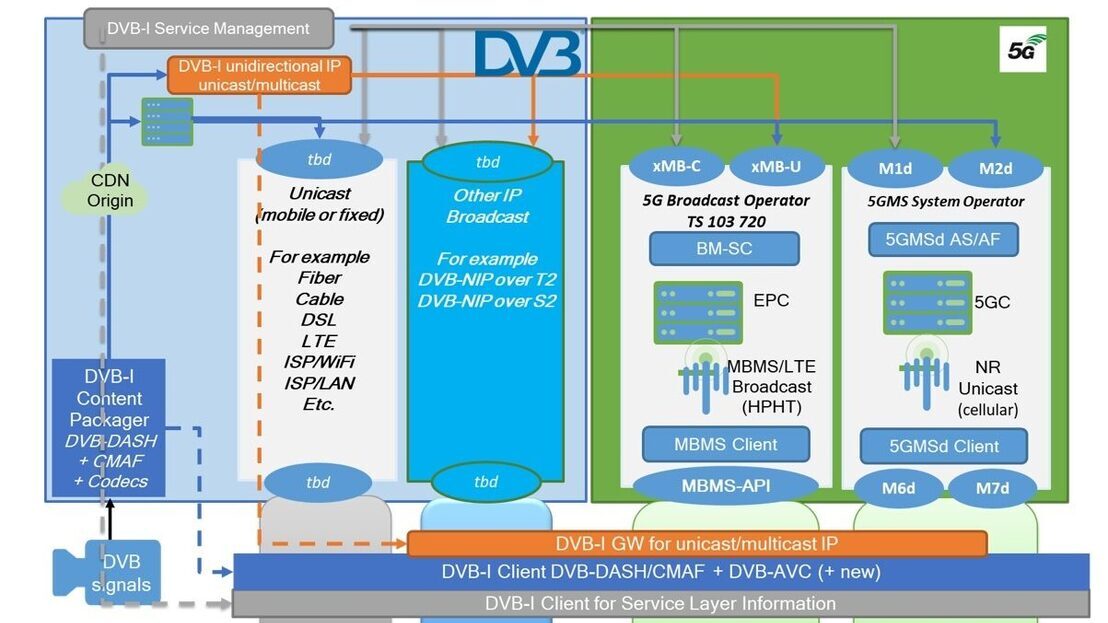

This paper addresses a summary of completed Rel-18 technologies for media and XR related technologies and provides an overview on what is happening and expected in Rel-19, and possibly even beyond in the 6G era.
5G-based Media Distribution, developed by 3GPP, is getting ubiquitous, global and across different verticals. 3GPP SA4, the 3GPP working group for media technologies, is the powerhouse for developing the specifications relevant for content delivery, compression, quality-of-experience, codecs and formats. With the entrance into 5G advanced as of Release-18, 3GPP has addressed the needs for traditional content distribution, for emerging XR services, the integration of AI/ML into media workflows and the support for verticals for their media needs.
This paper addresses...
Exclusive Content
This article is available with a Technical Paper Pass
Dynamic streaming content packaging with C2PA
Tech Papers 2026: This paper presents an implementation of the approach adopted by C2PA for live video to dynamic packaging.
.jpg)
Dynamic power control for sustainable broadcast transmitter networks
Tech Papers 2026: This paper proposes an approach that uses predictive modelling in combination with real-time interference monitoring to optimise transmitter powers dynamically, with minimal impact on the consumer.
.jpg)
A standardised framework for C2PA provenance in media workflows
Tech Papers 2026: This paper presents the first standardised framework for implementing C2PA for media provenance across newsrooms of varying sizes and operational contexts.
.jpg)
Building MXL together: Progress of the multi-vendor open-source media exchange SDK
Tech Papers 2026: This paper presents the Media eXchange Layer (MXL), an open-source SDK project hosted by the Linux Foundation in collaboration with the EBU and NABA.
.jpg)
Search first, inspect visually when needed: A multi-agent architecture for semantic video archival retrieval
Tech Papers 2026: This paper introduces Smart Chat, a multi-agent video question-answering system that searches indexed video moments, localizes candidate evidence, and inspects a short clip only when visual verification is needed.
Registered users only: Login