
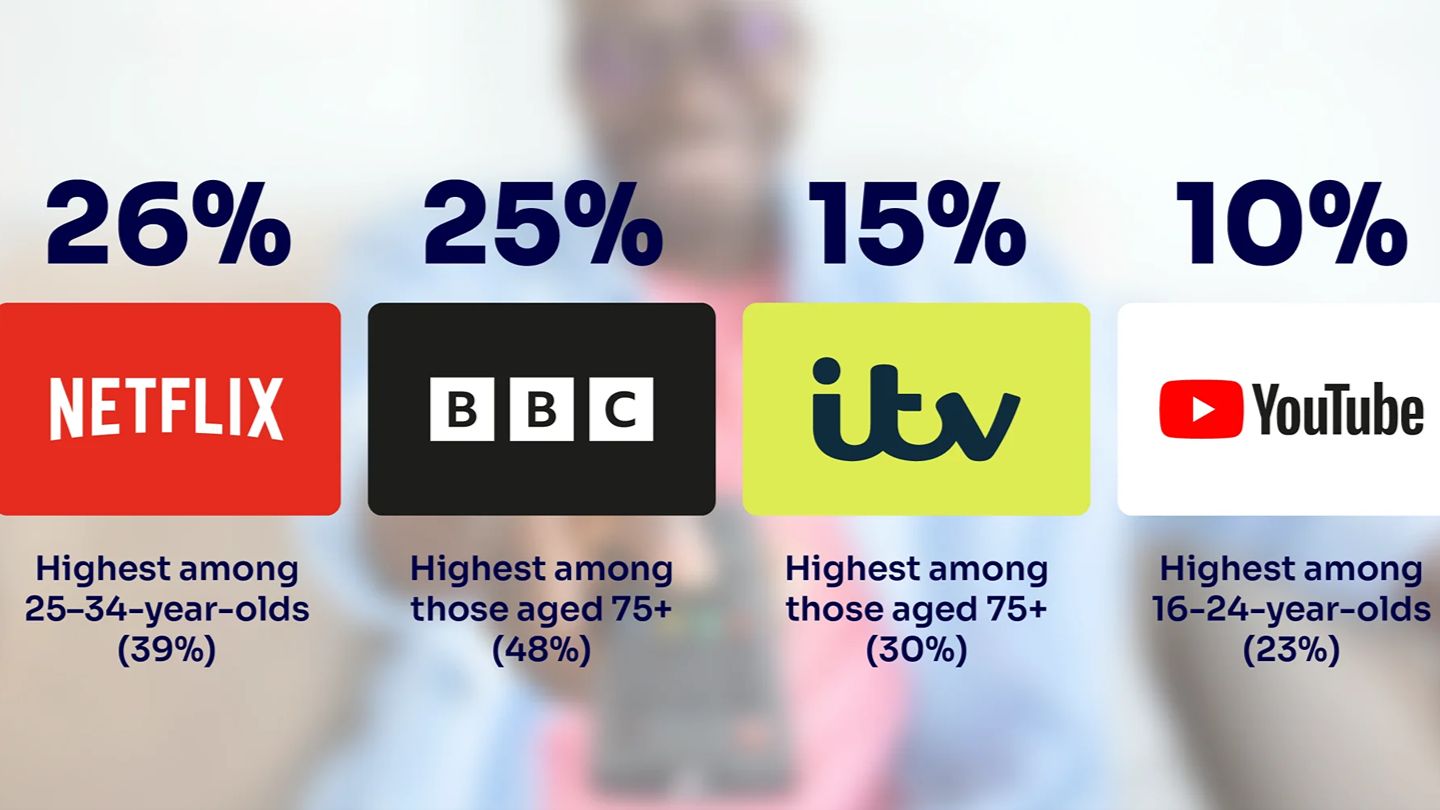
Most UK audiences will first turn to Netflix before the BBC or ITV when deciding what to watch, according to research by media regulator Ofcom.
Ofcom's annual Media Nations report shows that more than a quarter of viewers (26%) say Netflix is their first choice when looking for something to watch, with the BBC next in line at 25%. ITV is now the first choice for 15% of audiences, while 10% go to YouTube first.
The findings underline the growing challenges faced by traditional broadcasters – from ongoing revenue pressures to fierce competition to wrestle back viewers’ attention from global streamers and online video services.
Despite these pressures, Ofcom found that the UK’s traditional broadcasters are showing signs of resilience. Viewing of broadcaster-owned on-demand services such as BBC iPlayer, ITVX, Channel 4 Streaming, and 5 streaming increased by 9% year on year, making them the fastest-growing category of television service.
By contrast, the presence of subscription streaming services in UK homes has largely plateaued at around 70%, following years of rapid growth during the Covid-19 pandemic.
However, growth in broadcaster on-demand viewing has not been enough to offset the continued decline in audiences for traditional linear television channels. Last year, 70% of people in the UK watched content from traditional broadcasters – including live TV, recorded playback, and on-demand services – for at least 15 minutes on an average week.
This has fallen steadily from 73% in 2024 and 78% in 2022. Declines were seen across all age groups, including viewers aged 75 and over.
Public service broadcasters continue to enjoy strong levels of audience satisfaction and remain the leading force in UK-made programming, delivering more than 30,000 hours of first-run UK-originated content in 2025. UK broadcasters also offer over 60,000 hours of UK programming across their on-demand services.
Ofcom found that the amount of time people spend watching YouTube on television sets has doubled since 2022, reinforcing the platform's growing role as a living-room viewing destination.
Average daily YouTube viewing on TV sets increased from nine minutes per person in 2022 to 19 minutes in 2025. Across all devices connected in the home, total YouTube viewing rose to 41 minutes per person per day, up from 33 minutes in 2022.
The BBC and Channel 4 recently held talks about the possibility of combining their streaming platforms, according to BBC Director General Matt Brittin. Discover more here.
 (1).jpeg)
150 students take over On Air 2026’s five-channel broadcast
On Air 2026 will see 150 students take charge of the Media Talent Manifesto (MTM) broadcast’s 24-hour culture, news, sport, film, and kids channels on 22–23 October 2026.
 (1).jpg)
BBC Three and BBC Scotland linear channels to close
The BBC has confirmed the closure of BBC Three, BBC Scotland, and BBC Radio 4 Extra linear broadcast services in spring 2027.
.jpg)
EBU launches group to create shared live production tools
The European Broadcasting Union (EBU) has launched an open live production cloud group for its public service broadcasting members to build shared live production capabilities.
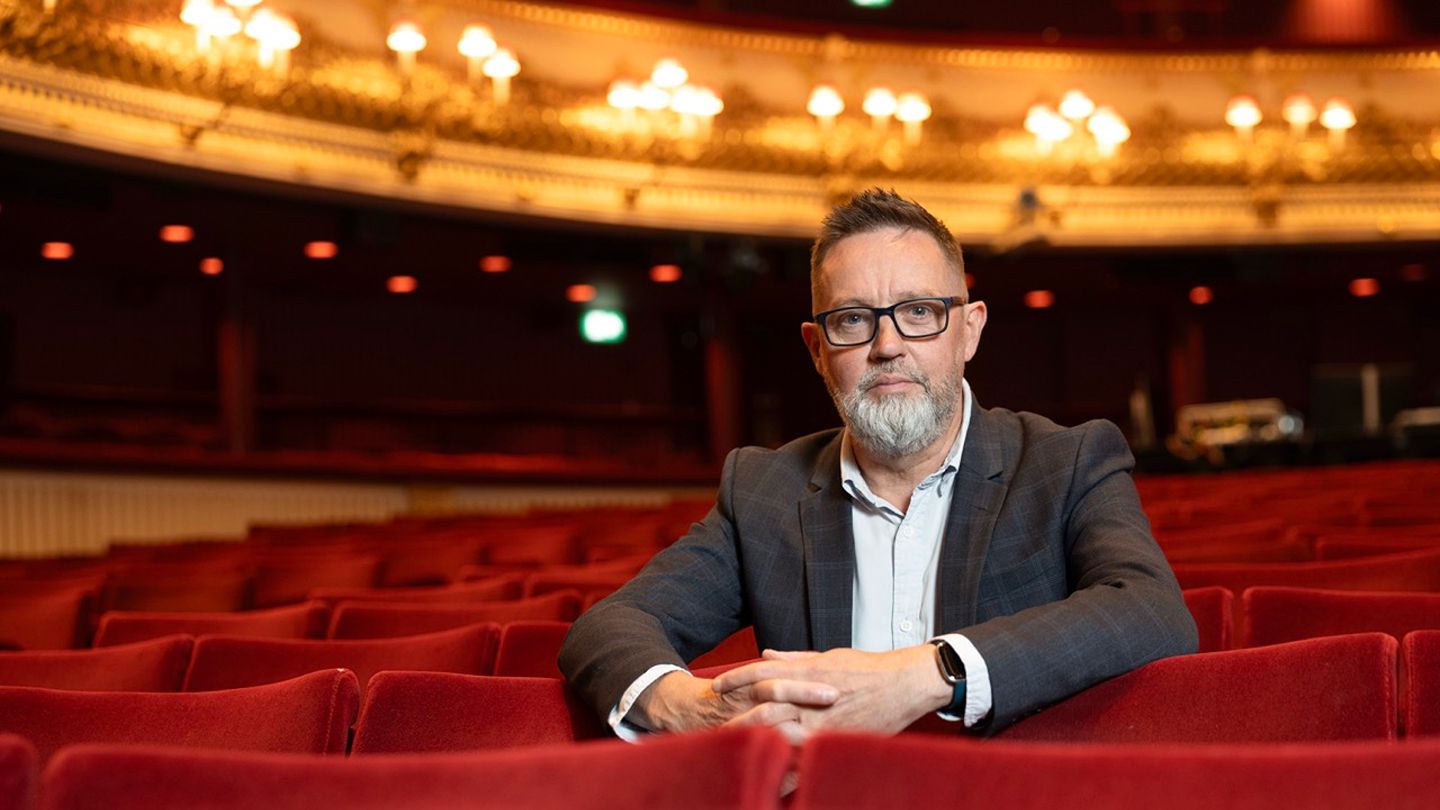
Noel McClean appointed Head, Bectu
Bectu has appointed Noel McClean to head the union for broadcasting, live events, and theatres.
 (1).jpg)
BBC licence fee could extend to streaming services
The BBC licence fee could be extended to online streaming services such as YouTube, Netflix, Amazon, and Disney+, according to reports.
 (1).jpg)