
Generative AI will enrich tech companies but will substantially jeopardise the income of human creators in the music and audiovisual sectors in the next five years.
This is one of the key findings of a global study measuring the economic impact of AI on the music and audiovisual sectors. The report was commissioned by the International Confederation of Societies of Authors and Composers (CISAC), and conducted by PMP Strategy.
.jpg)
It predicts the revenues of Gen AI providers will see dramatic growth over the next five years, but creators risk losing a large share of their current income due to AI’s substitutional impact on human-made works.
Music and audiovisual creators will see respectively 24% and 21% of their revenues at risk of loss by 2028, according to the report. This amounts to a cumulative loss of €22bn over the five-year period (€10bn in music; €12bn in audiovisual).
The study finds that the market for music and AV content generated by AI will increase exponentially in the next five years, growing from around €3bn now to €64bn in 2028.
The economic study assesses that, as a result of this exponential growth in the market for music and audiovisual content, the future revenues of Gen AI providers will rise to annual revenues of €4bn in music (up from €0.1bn in 2023) and €5bn in audiovisual (up from €0.2bn) by 2028. These are revenues derived directly from the unlicensed reproduction of creators’ works, representing a transfer of economic value from creators to AI companies.
In the music sector, the streaming and music library markets will be strongly impacted by AI. By 2028, Gen AI music is projected to account for approximately 20% of traditional music streaming platforms’ revenues, and around 60% of music libraries’ revenues.
In the audiovisual sector, translators and adaptors for dubbing and subtitling will experience the strongest impact, with 56% of their revenue at risk, while screenwriters and directors could see their revenues cannibalised by 15–20%.
The study concludes: “In an unchanged regulatory framework, creators will actually suffer losses on two fronts: the loss of revenues due to the unauthorised use of their works by Gen AI models without remuneration; and replacement of their traditional revenue streams due to the substitution effect of AI-generated outputs, competing against human-made works”.
CISAC President Björn Ulvaeus said: "For creators of all kinds, from songwriters to film directors, screenwriters to film composers, AI has the power to unlock new and exciting opportunities – but we have to accept that, if badly regulated, generative AI also has the power to cause great damage to human creators, to their careers and livelihoods. Which of these two scenarios will be the outcome? This will be determined in large part by the choices made by policy makers, in legislative reviews that are going on across the world right now. It’s critical that we get these regulations right, protect creators’ rights and help develop an AI environment that safeguards human creativity and culture."
You are not signed in
Only registered users can comment on this article.
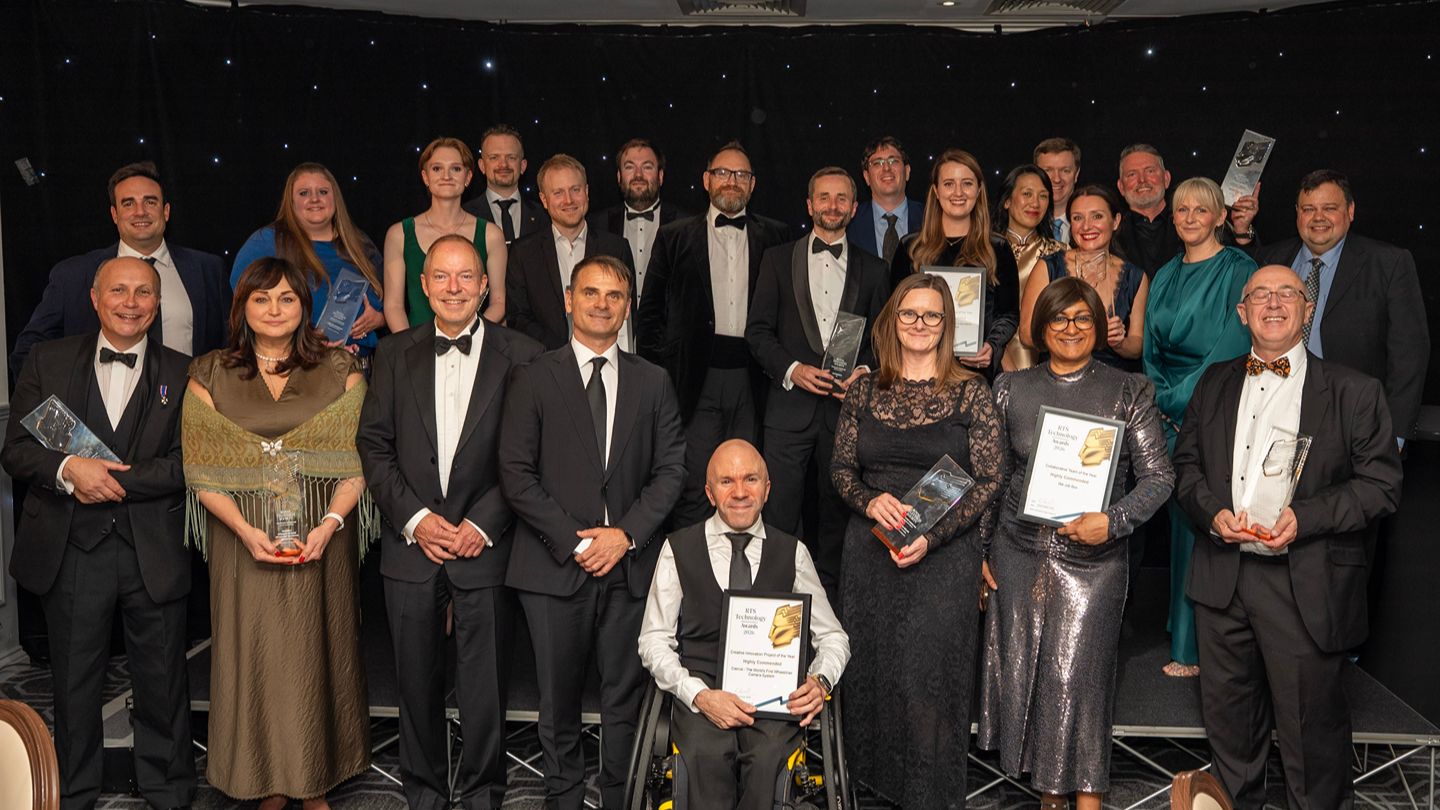
RTS reveals Technology Awards 2026 winners
Evan Shapiro, ITN’s Jon Roberts, and On Air 2025 were among the winners of the RTS Technology Awards 2026.
.webp)
France Télévisions and TDF test 5G broadcast of Diagonale des Fous
For the mountain ultramarathon Diagonale des Fous, TDF has rolled out a 5G broadcast trial in partnership with France Télévisions, Antenne Réunion, and Web TV Grand Raid.
 (1).jpg)
CNN and Financial Times sign AI deal with Google
CNN has signed a strategic multi-year partnership with Google, which will see the organisation provide enhanced content rights for Google’s generative AI news product pilots.
 (1).jpeg)
150 students take over On Air 2026’s five-channel broadcast
On Air 2026 will see 150 students take charge of the Media Talent Manifesto (MTM) broadcast’s 24-hour culture, news, sport, film, and kids channels on 22–23 October 2026.
.jpg)
IBC calls for Challenge submissions for 2027 Accelerators
IBC has launched the official call for Challenge submissions for its 2027 Accelerator Media Innovation Programme.
.jpg)