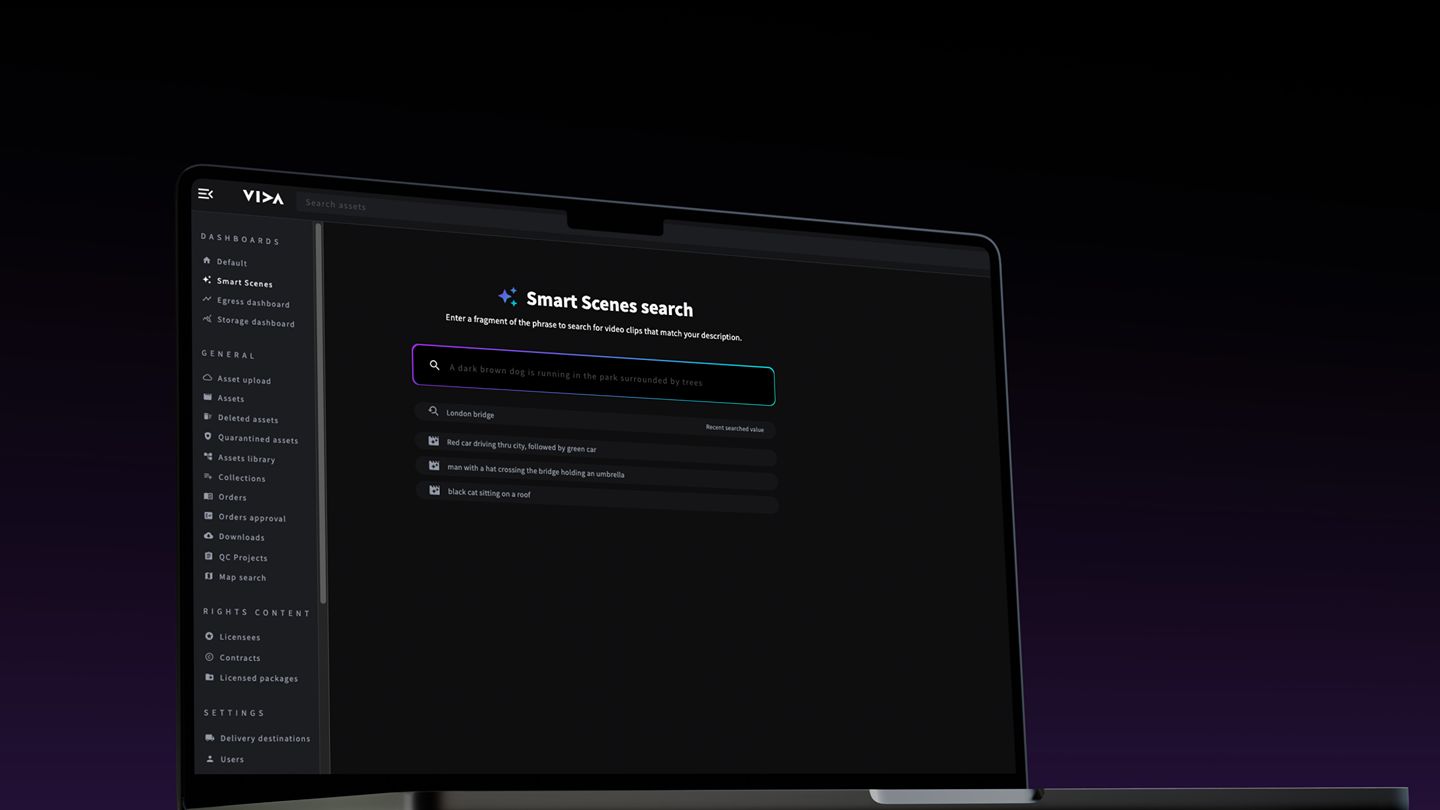
The British Film Institute (BFI) has awarded £192,500 in funding to King’s College London for a project exploring how AI technologies could be used to unlock potential within screen archives.
Intelligent Systems for Screen Archives (ISSA) is designed by King's College London, through a collaboration between its Department of Digital Humanities and King’s Digital Lab.
.jpg)
ISSA will explore AI opportunities for audiovisual archives, developing tools and skills to support collections in their work documenting, developing, and sharing moving image heritage.
The project will run over 30 months and is scheduled to complete in 2027. It will focus on the development of a technical prototype to enable AI experimentation with moving image collections, including modules for data enrichment, exploration, retrieval, and interaction. It will also organise a programme of workshops with six different archive partner organisations to test the prototype with their collections, and to share the outcomes.
The project brings together five film and television archive partners: National Library of Scotland, National Library of Wales, Northern Ireland Screen, North West Film Archive, and Yorkshire Film Archive, in collaboration with King’s Digital Lab. Film Archives UK will also be involved in the project workshop.
The funding was awarded via the BFI National Lottery Innovation Fund.
Rishi Coupland, BFI Director of Research and Industry Innovation, said: “AI technologies have the potential to unlock enormous potential for screen archives of all scales, however in this fast-moving space we need a much more comprehensive understanding of the opportunities and the challenges facing audiovisual collections.
“This project led by King’s College London will provide new tools, skills and insights to establish an R&D framework that could benefit the wider sector in integrating AI technologies in the institutional fabric of moving image archives, while ensuring
that we prioritise considerations such as copyright and ethical perspectives.”
Dr Daniel Chávez Heras, ISSA Principal Investigator and Lecturer in Digital Culture and Creative Computing at King’s College London, said: "We are reaching a critical inflection point in which we have to define the role that AI technologies are going to play in social life, including how we want these technologies to mediate our relationship with over a century of film and television. This is too important to be left to a handful of large companies, so I am delighted that ISSA has been awarded through the BFI Innovation Challenge Fund to enable deep collaboration between King's College London and moving image archives across the UK. This is an exciting project that builds towards critical, responsible and public AI systems."
You are not signed in
Only registered users can comment on this article.
 (2).jpg)
Disney to buy $20m of Character.ai assets, following suicide allegations
As it files for bankruptcy, controversial AI company Character.ai has reached a $20m agreement with Disney affiliate Disney Worldwide Services over its assets.

Goalhanger launches creator-led media venture with Marina Hyde’s Always On
Podcast network Goalhanger has launched Goalhanger X, which the company describes as a new model for building “complete media ecosystems around exceptional creators.”
 (1).jpg)
Netflix reportedly preparing to lay off 5% of workforce
Netflix is reportedly planning a significant round of redundancies that could lay off approximately 5% of its headcount.
EBU protests funding cut for Irish broadcaster RTÉ
The European Broadcasting Union (EBU) says it is “deeply concerned” by the Irish government's decision to cut agreed public funding for public broadcaster RTÉ by €20m.
 (1).jpg)
Netflix names IMG as production partner for FIFA Women’s World Cup Brazil 2027
Netflix has appointed IMG as the production partner for its coverage of the FIFA Women’s World Cup Brazil 2027, set to take place from 24 June to 25 July 2027.
.jpg)
.jpg)
.jpg)