Berlin-based video streaming technology specialist nanocosmos has announced the launch of its next-generation streaming platform supported by Media over QUIC (MoQ) and WebTransport.
Nanocosmos said its architecture is built for businesses that depend on real-time video for interactive engagement — from iGaming and live auctions to corporate events and virtual engagement platforms. It added that this reflects a broader shift: moving from protocol-level innovation to practical infrastructure that supports new revenue models and audience experiences.
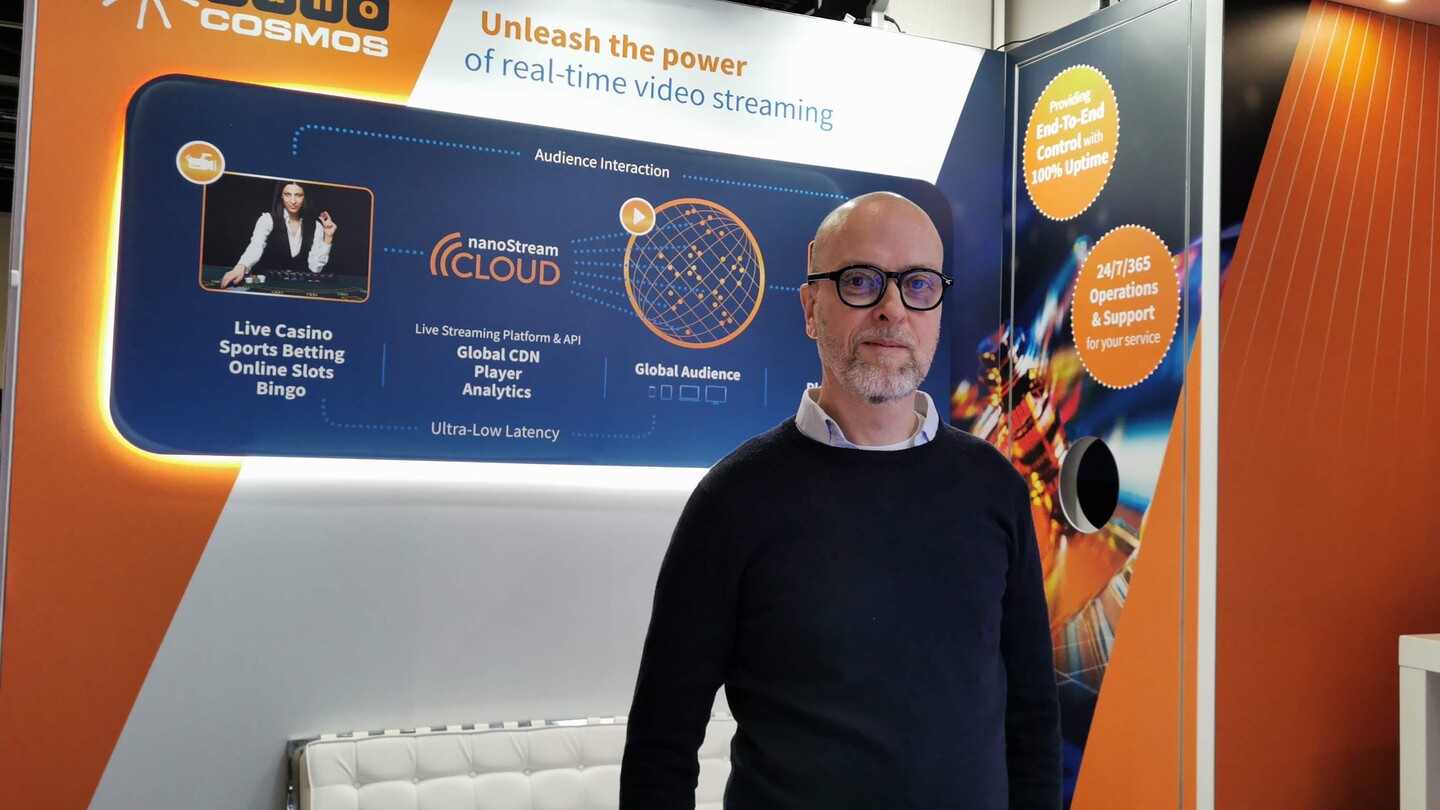
The nanoStream Platform transmits audio and video over the QUIC protocol. Oliver Lietz, CEO of nanocosmos, said that while the IETF MOQT standard is still under development, “we are using our own media-over-QUIC approach (MOQ, not MOQT) to deliver low-latency live streams to enable and improve exciting use cases and bring this technology to our customers.”
The company said MoQ is deeply integrated into the nanoStream ecosystem. Existing workflows remain intact, while the browser-native nanoStream Player enables MoQ-based delivery with zero configuration. Where MoQ is not available, an automatic failover is enabled to ULL-HLS and/or Websocket transport for seamless experiences on any device or network.
“There’s been a lot of noise around MoQ, and rightly so,” Lietz said. “But this isn’t lab tech or future promise. We are following a pragmatic approach solving existing challenges for our customers’ use cases, and unlocking new business models through deeper, real-time audience connections. We’ve built a production-ready platform that puts MoQ to work today. It’s fully integrated, stable, and backwards-compatible with existing workflows, requiring nothing more than a simple player update.”
.jpg)
Grand Theft Auto 6 becomes biggest entertainment launch in history
The release of Grand Theft Auto 6 (GTA 6) broke retail sales records on its first full day (November 19) of availability, hitting $3.8bn (£2.9bn).
 (1).jpg)
BBC R&D highlights broadcast TV's 2038 problem
BBC Research and Development has warned that some televisions currently on sale could develop problems in 2028 because of the way they represent dates and times internally, causing the electronic programme guide (EPG) to no longer function.
 (1).jpg)
Operative appoints new SVP for commercial growth
Operative has appointed Brian Beirne as Senior Vice President, Commercial Growth, an executive who previously worked at the company for 10 years until 2022.
 (2).jpg)
Telestream appoints a Chief Revenue Officer
Media workflow and measurement technologies provider Telestream has appointed Joseph Hopkins as its Chief Revenue Officer (CRO).
.jpg)
Bitmovin AI Scene Analysis integrates with Google Ad Manager PPS
Bitmovin has announced an integration between Bitmovin’s AI Scene Analysis and publisher-provided signals (PPS) in Google Ad Manager.