
The BBC should explore new ways to raise revenue, make better use of its buildings to support the creator economy, and spend more wisely when competing for programming, according to a group of UK MPs.
The recommendations are set out in a new report by the influential UK Parliament’s Digital, Culture, Media and Sport Committee, published ahead of the government finalising its proposals for the next BBC Royal Charter.
The Royal Charter will set out how the broadcaster will be governed, regulated and funded from 2028 onwards.
The Committee warned that the Charter review represents a fork in the road for the broadcaster, and said that without change it will be left to managed decline.
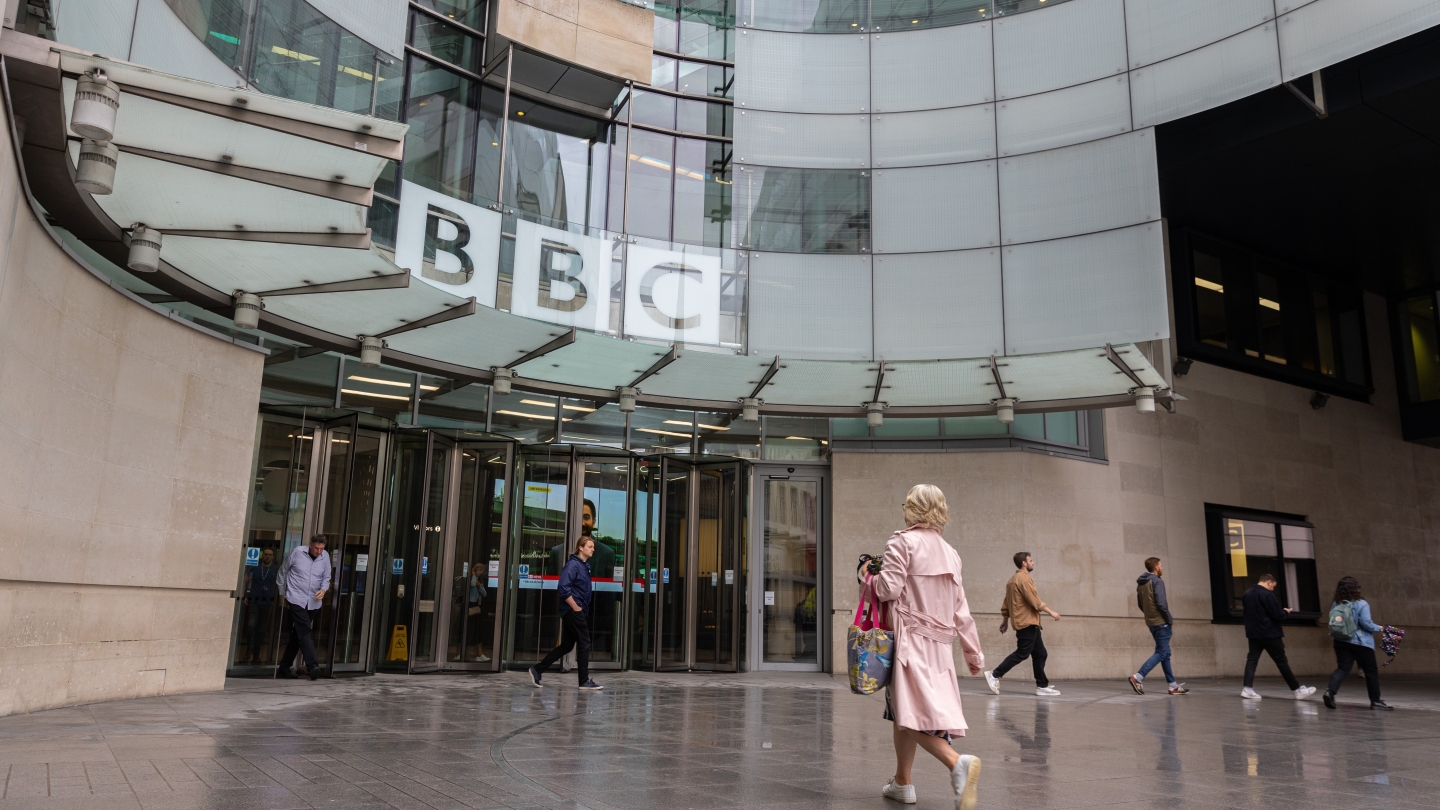
It highlighted challenges faced by the BBC, including changing viewing habits and a fall in numbers paying the licence fee.
The committee makes a series of recommendations to continue universal funding for the BBC. “The current TV licence fee is outdated and no longer fit for purpose. All of the alternative funding options have drawbacks. The best next step is for the government to reform the licence fee, so it is no longer linked to a television set. And it should keep an open mind on a household levy as a long-term solution,” said the report.
It said the BBC must also look at how it can grow its income through commercial activity and use its resources more wisely, continuing to spread investment and decision-making across the UK. It said the government must take back funding of the BBC World Service.
The report also calls for the end of political appointments to the BBC board as part of efforts to improve governance and ensure the corporation remains an institution the public can trust.
The broadcaster must also play a leading role in shaping the future media landscape, the committee says, recommending that it is given new public purposes relating to innovation and technology and combatting misinformation and disinformation.
Dame Caroline Dinenage MP, Chair of the Digital, Culture, Media and Sport Committee, said: “This is a pivotal moment for the BBC. Continue along the current path and we condemn a national institution to managed decline, squandering the immeasurable benefits it brings to our economy and society.
“The government must ensure the broadcaster has a sustainable and universal source of funding, while the BBC can play its part by sweating its assets and boxing clever for the licence payer by ending illogical practices such as outbidding commercial rivals for overseas hits such as Suits, Schitt's Creek and Scooby Doo.
“Now is the time for the government and BBC together to grasp the opportunity to create a leaner, more efficient broadcaster that is equipped to compete on the global stage and is a beacon of trust both at home and abroad.”

RTS reveals Technology Awards 2026 winners
Evan Shapiro, ITN’s Jon Roberts, and On Air 2025 were among the winners of the RTS Technology Awards 2026.
.webp)
France Télévisions and TDF test 5G broadcast of Diagonale des Fous
For the mountain ultramarathon Diagonale des Fous, TDF has rolled out a 5G broadcast trial in partnership with France Télévisions, Antenne Réunion, and Web TV Grand Raid.
 (1).jpg)
CNN and Financial Times sign AI deal with Google
CNN has signed a strategic multi-year partnership with Google, which will see the organisation provide enhanced content rights for Google’s generative AI news product pilots.
 (1).jpeg)
150 students take over On Air 2026’s five-channel broadcast
On Air 2026 will see 150 students take charge of the Media Talent Manifesto (MTM) broadcast’s 24-hour culture, news, sport, film, and kids channels on 22–23 October 2026.
.jpg)
IBC calls for Challenge submissions for 2027 Accelerators
IBC has launched the official call for Challenge submissions for its 2027 Accelerator Media Innovation Programme.
 (1).jpg)
.jpg)

.jpg)