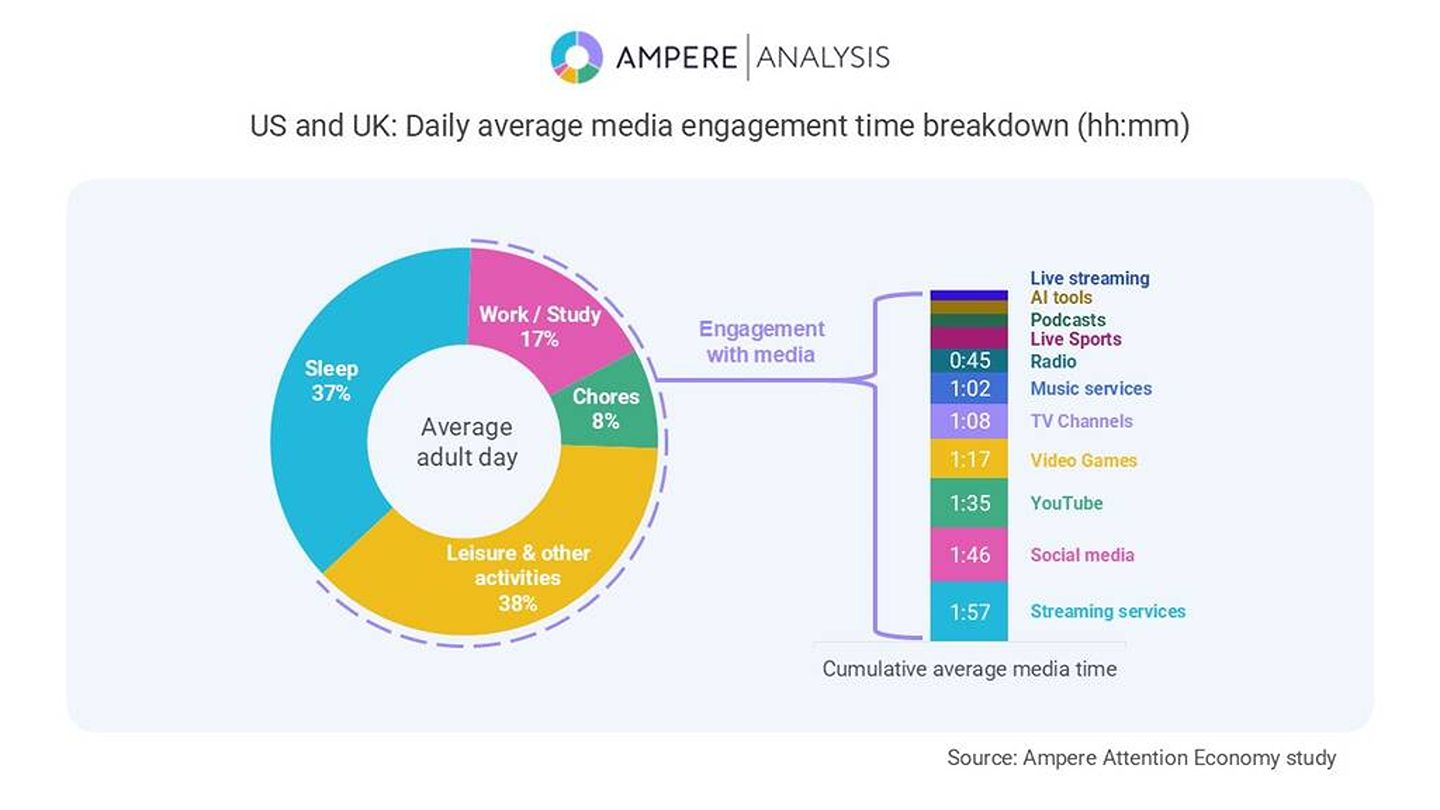
The average American and British adult spends a cumulative 11 hours consuming different forms of media, according to research by Ampere Analysis.
Ampere’s Attention Economy study shows that rather than relying on a single source of entertainment, consumers are increasingly selecting from a menu of media depending on their mood, age, and needs.
Further, the research accounts for overlapping activities, such as using a phone while watching TV or streaming.
Streaming services (1:57 hours), social media (1:46 hours), and YouTube (1:35 hours) attract the highest levels of daily media engagement.
The report revealed that streaming services are most often used for relaxation and immersion, YouTube for discovery and lifting users’ mood, and social media is used to relieve boredom or provide distraction.
Media diets also differ by age. Gen Alpha (11-15) spends the most time on YouTube (1:45) and gaming (1:56), while Gen Z (16-29) spends the most time on social media (1:54) and music services (1:20).
Generation X and Baby Boomers spend relatively more time with streaming services, TV channels, and live sports.
Consumers in the US and UK access an average of 11.5 media platforms every week, including pay TV, streaming services, social media, music streaming, gaming, and broadcaster VOD. Streaming services like Netflix or Disney+ account for 4.1 of these services per week. Gen Alpha accesses an average of 13.6 platforms, the highest of any age group.
Mobile devices have also expanded where media is consumed. More than half (55%) of music streaming users regularly listen outside the home, alongside 34% of podcast listeners, 20% of social media users, and 11% of gamers.
Mobile devices have also driven higher daily media engagement by making simultaneous media use easier. In the US and UK, for example, more than a quarter (28%) of Netflix users regularly watch the service on their smartphone.
One third (33%) of YouTube users say they use the platform when they "want something on in the background".
Sam Nursall, Research Manager at Ampere Analysis, said: "Today's consumers have more varied media diets than ever before, selecting from an expanding menu of media depending on what they want in the moment. Whether they're looking to relax, discover something new, or simply fill spare time, each medium serves a different purpose. That's today's attention economy. For advertisers and broadcasters, understanding those different moments is just as important as understanding the audience itself."
Ampere Analysis research also recently discovered that streaming audiences are waiting longer for the return of original shows, with the gap between returning series nearly doubling since 2020. Discover more here.
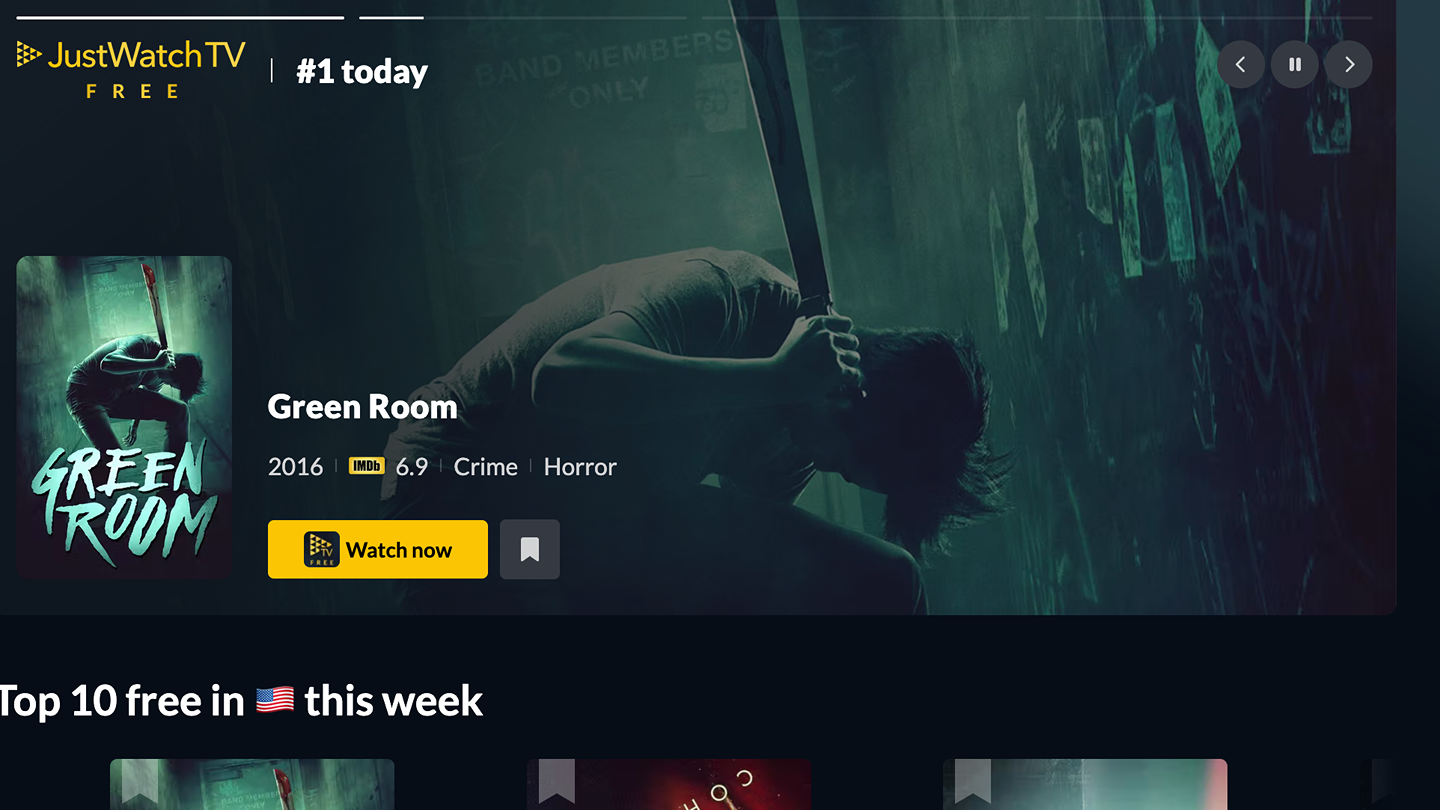
JustWatch to launch own streaming service
Reports say that JustWatch Group, which operates the world’s largest streaming guide, will launch its own streaming service, called JustWatch TV, in October.
.jpg)
CBC/Radio Canada picks Dalet
CBC/Radio-Canada has selected Dalet to modernise its news operations across Canada.
 (1).jpg)
Evergent wins API Gold from TM Forum
Evergent has achieved Gold status in TM Forum’s Open API Conformance Certification programme, advancing from the Silver status earned in the first quarter of 2026.
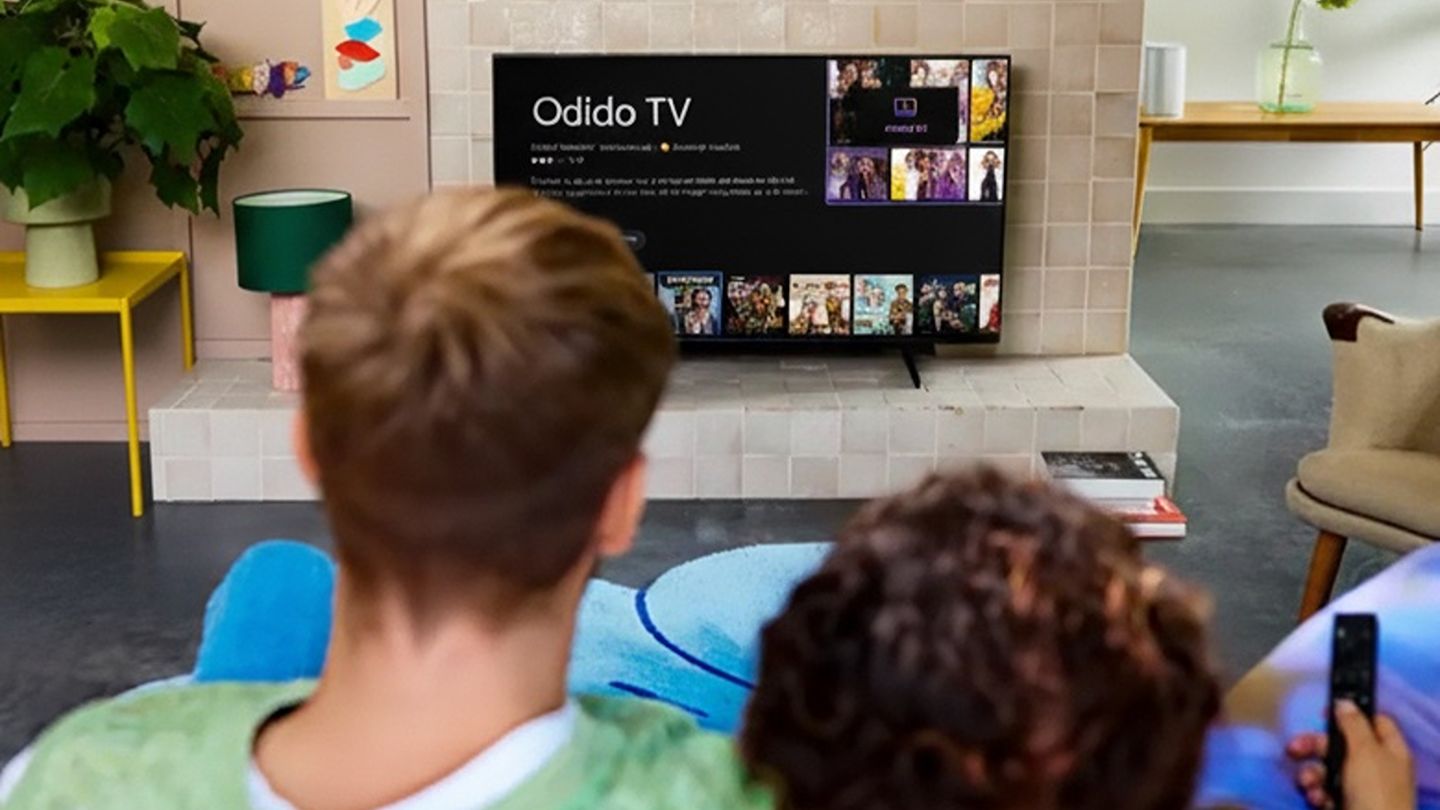
Dutch telco Odido picks Synamedia Go
Odido, a telecoms operator in the Netherlands, has selected Synamedia Go to support its TV streaming service.
Zixi extends integration with TAG Video Systems
Zixi and TAG Video Systems have announced an extended integration that enables Zixi’s live video delivery and orchestration software platform to leverage TAG’s content matching technology.
.jpg)
 (1).jpg)