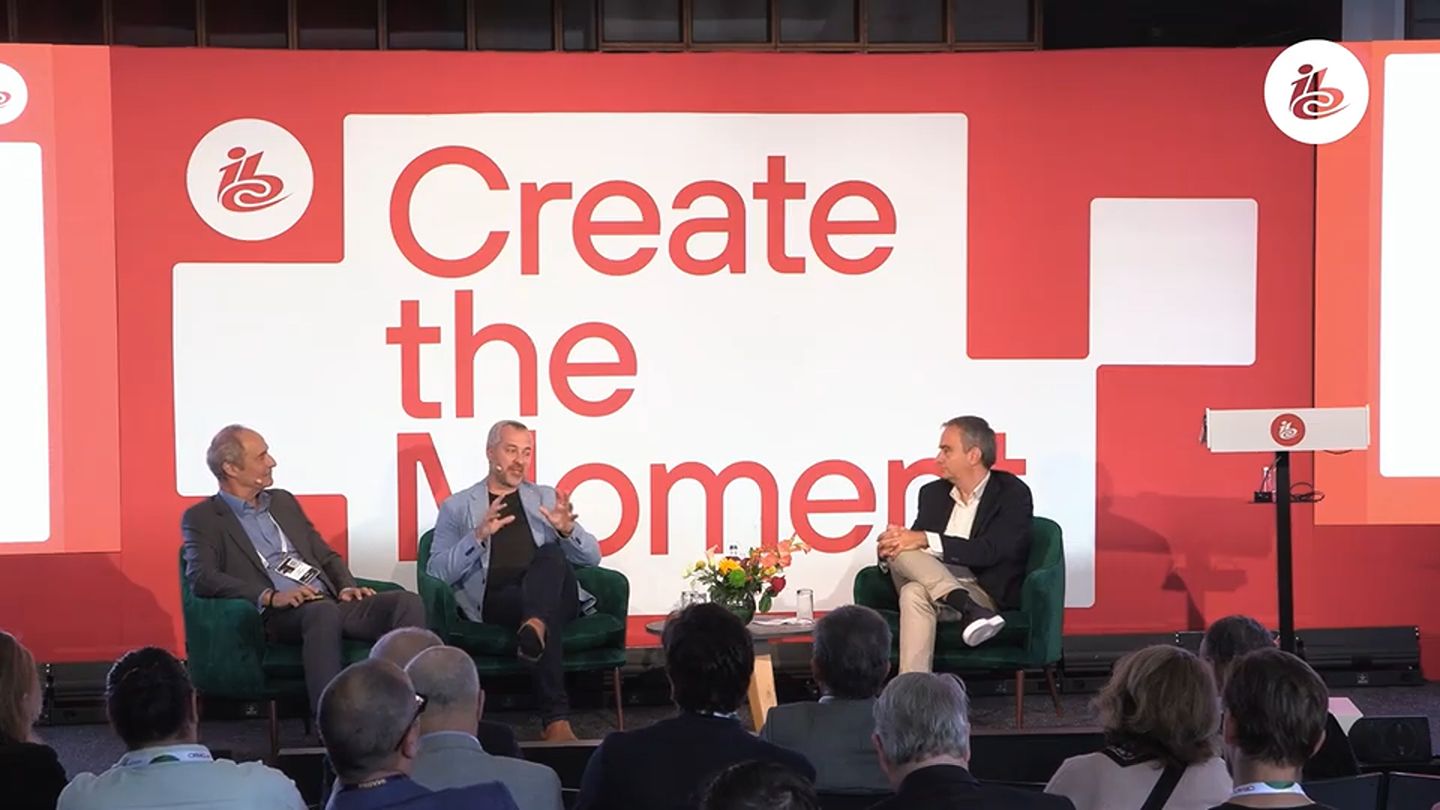

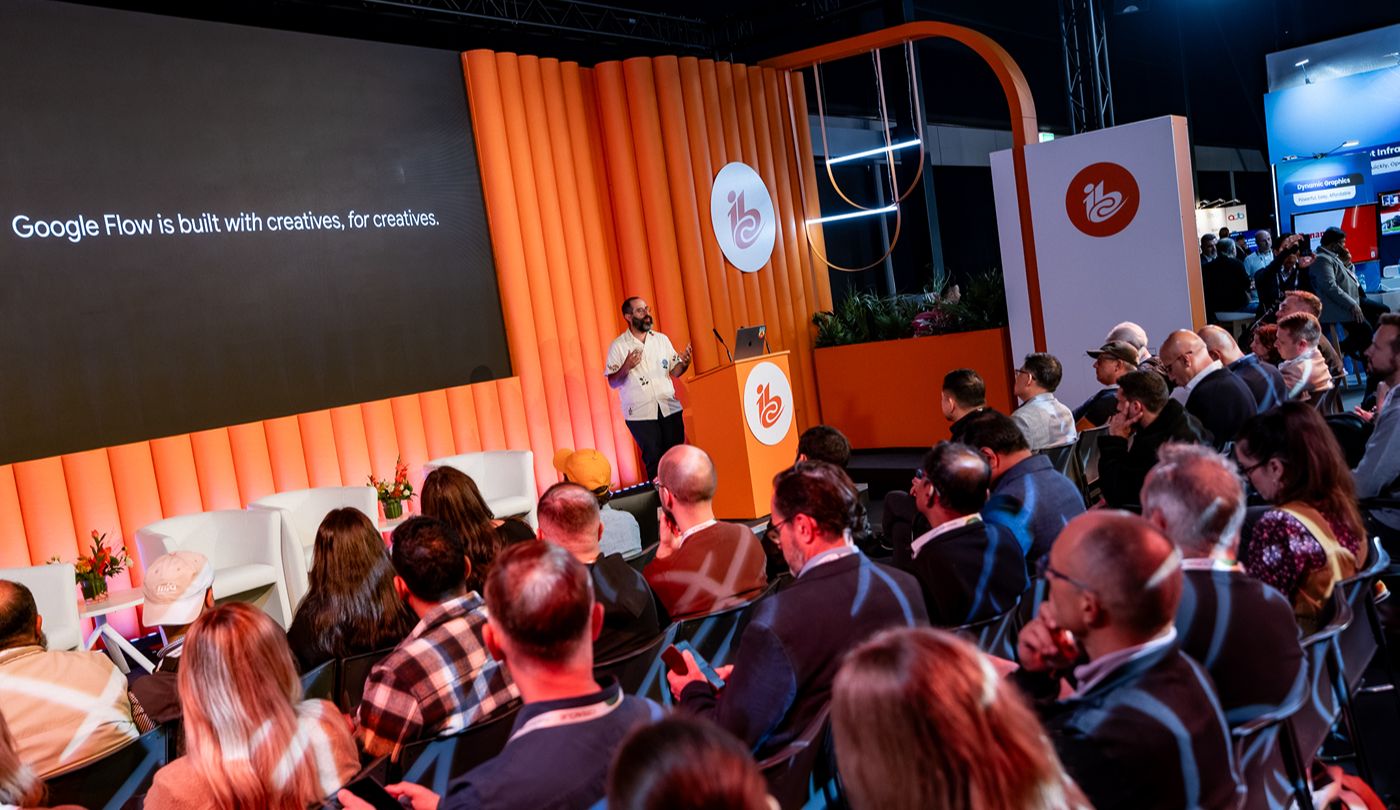
IBC Conference: Hogarth Worldwide’s Francisco Lima and Orange Logic’s Jim Cavedo discussed the ways genAI is already changing creative production – and why the real breakthrough comes when it’s paired with a strong DAM foundation.
GenAI is no longer a speculative talking point in creative production. As Francisco Lima, Global Head of Emerging Creative Technologies at Hogarth Worldwide, explained, it is already transforming the way teams move from idea to execution. “GenAI now is allowing us to rethink the whole creation process, going from linear pipelines to co-creative systems where people are collaborating and creating content at scale and speed,” he said.
The Content Everywhere (CE) session, presented in partnership with digital asset management (DAM) solutions provider Orange Logic, brought Lima together with Jim Cavedo, the company’s VP of Solutions. The discussion covered immediate use cases, the structural role of a DAM system in managing assets, and the compliance and brand-safety guardrails that must accompany AI’s rapid adoption.
Hogarth, part of the WPP group, adopted Orange Logic’s cloud-first DAM several years ago to underpin its global production workflows. That foundation, Cavedo argued, is what enables experimentation with AI at scale. “Context is the currency of agents,” he said, stressing that without a unified, governed fabric across repositories, fragmentation will “erode brand integrity, inflate costs, and cripple workflows.”
New creative possibilities
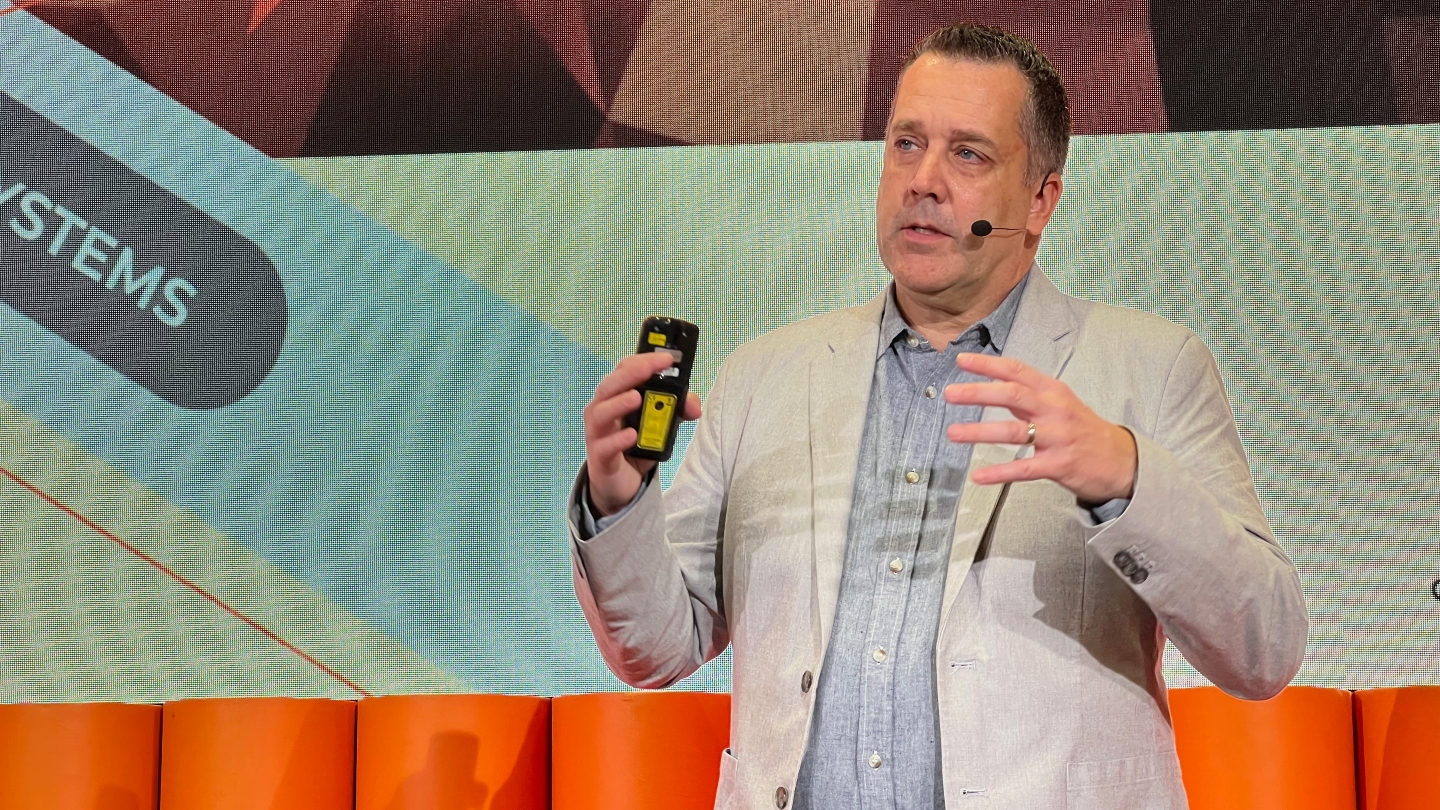
Lima walked the audience through the rapid evolution of pre-production. Storyboards gave way to 3D previz, but now generative AI is reshaping the process entirely. He highlighted recent work on an automotive commercial where genAI allowed his team to test scenes in remarkable detail. A single image could be transformed into a 3D model, then placed within a virtual environment sourced from real-world data such as Google Maps. “From a basic image in 3D, we can generate a [photorealistic] still, and from the image we can generate a video,” he explained. This allowed Hogarth to pre-visualise vehicle shots with precise lighting, accurate reflections, and context-specific backgrounds.
Automotive projects demand precision – down to the selection of a wheel or the curve of a fender – and Lima stressed how AI enhances, rather than replaces, traditional workflows. His team often layers generative assets with CAD data from the client or augments AI footage with CG simulations, ensuring that every detail is accurate while still benefiting from the speed and flexibility of AI-driven workflows.
“The more you can iterate early on, the better you’re going to be on set,” Lima added. “You can focus on making the content better, rather than fighting fires.” With commercial projects often running on compressed timelines, the ability to present clients with AI-generated variations, and even test them with focus groups, marks a significant change.
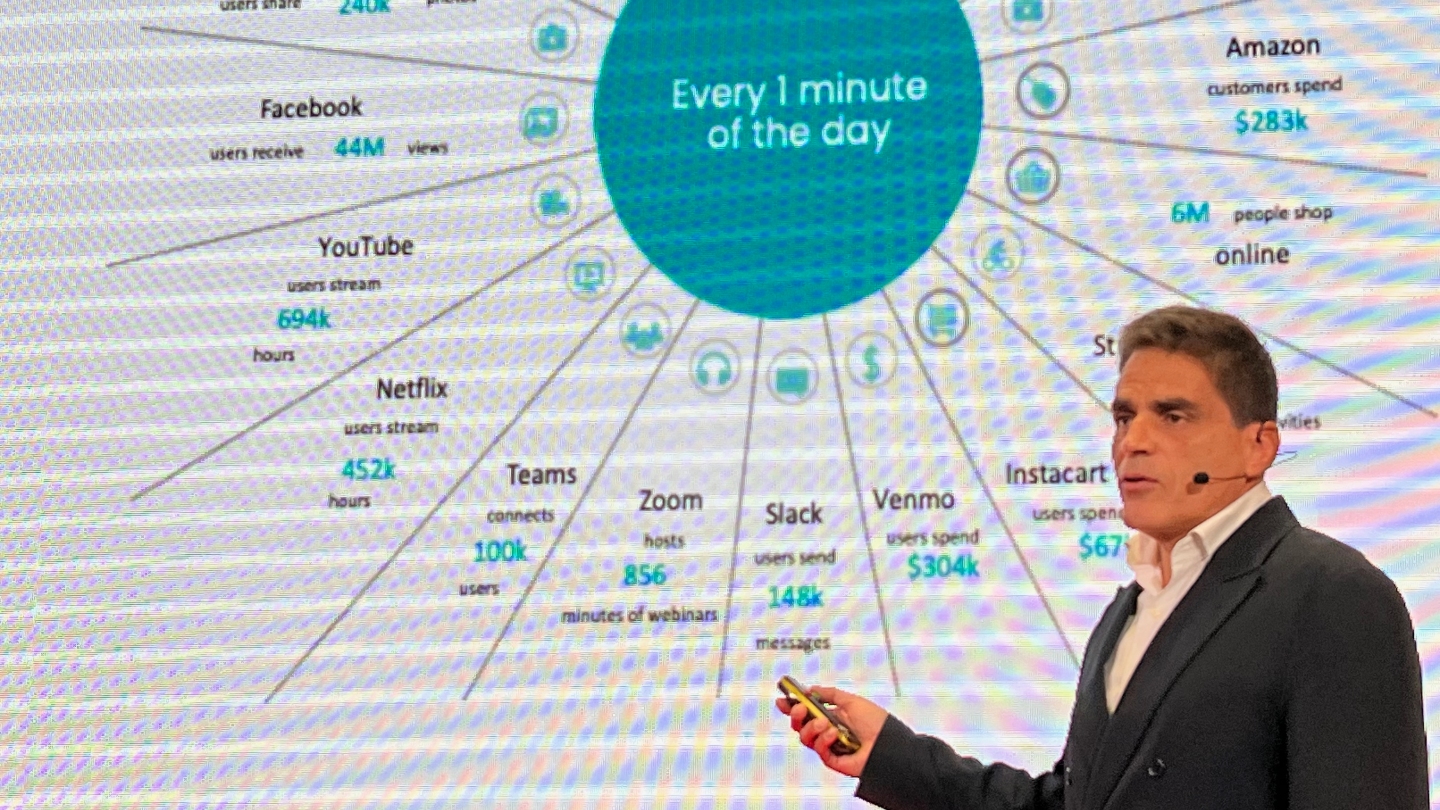
He likened the shift to the Industrial Revolution. Factories took decades to realise the productivity potential of electricity because they failed to redesign their systems. “The ones that really are going to benefit the most are the ones that are going to reimagine the entire system,” Lima noted.
Adoption and challenges
Cavedo asked Lima how Hogarth’s teams have handled the transition. Adoption, Lima admitted, is uneven. Some clients want AI pushed as far as possible, while others are cautious. Internally, success has hinged on empowering ‘pioneers’ within teams to experiment with tools – even if that creates friction with IT and compliance departments.
Another challenge is tracking. With dozens of models and platforms in play, maintaining a clear record of what was generated where, and ensuring it meets compliance standards, has become essential. Cavedo reinforced the point: “Speed and scale only matter if you can protect the brand integrity, rights, and compliance.”
Looking ahead
Both speakers agreed that the future lies not in one-off pilots but in embedding AI into core systems. “AI only creates value when it’s built into the systems and your content, not layered as a side experiment,” Cavedo emphasised.
For Lima, the opportunity is a more agile creative ‘factory,’ where analytics, creative, production, and AI specialists collaborate in real time. Hybrid workflows that mix live action, generative imagery, CG, and virtual production will become standard.
“This is really transforming what we can do,” Lima concluded. “GenAI is the missing piece that allows us to bring true agility to the creative process.
.jpg)
ULL-timate goal: How streamers are prioritising ultra-low latency
With audiences expecting instant global information, and broadcasters competing against social platforms that deliver clips within seconds, the race is on to deliver ultra-low latency (ULL) as a competitive edge.
RTS Convention: “The prize for standing still simply isn't an option”
AI was largely sidelined at the annual RTS gathering where the fate of public service media took precedence. Adrian Pennington reports.
Content Everywhere at IBC2026: AI moves from hype to action
Companies from across the Content Everywhere ecosystem highlight what they see as some of the most promising industry developments at IBC2026, while calling out areas where they think the industry has room for improvement.
How virtual sets are changing the shape of podcast production
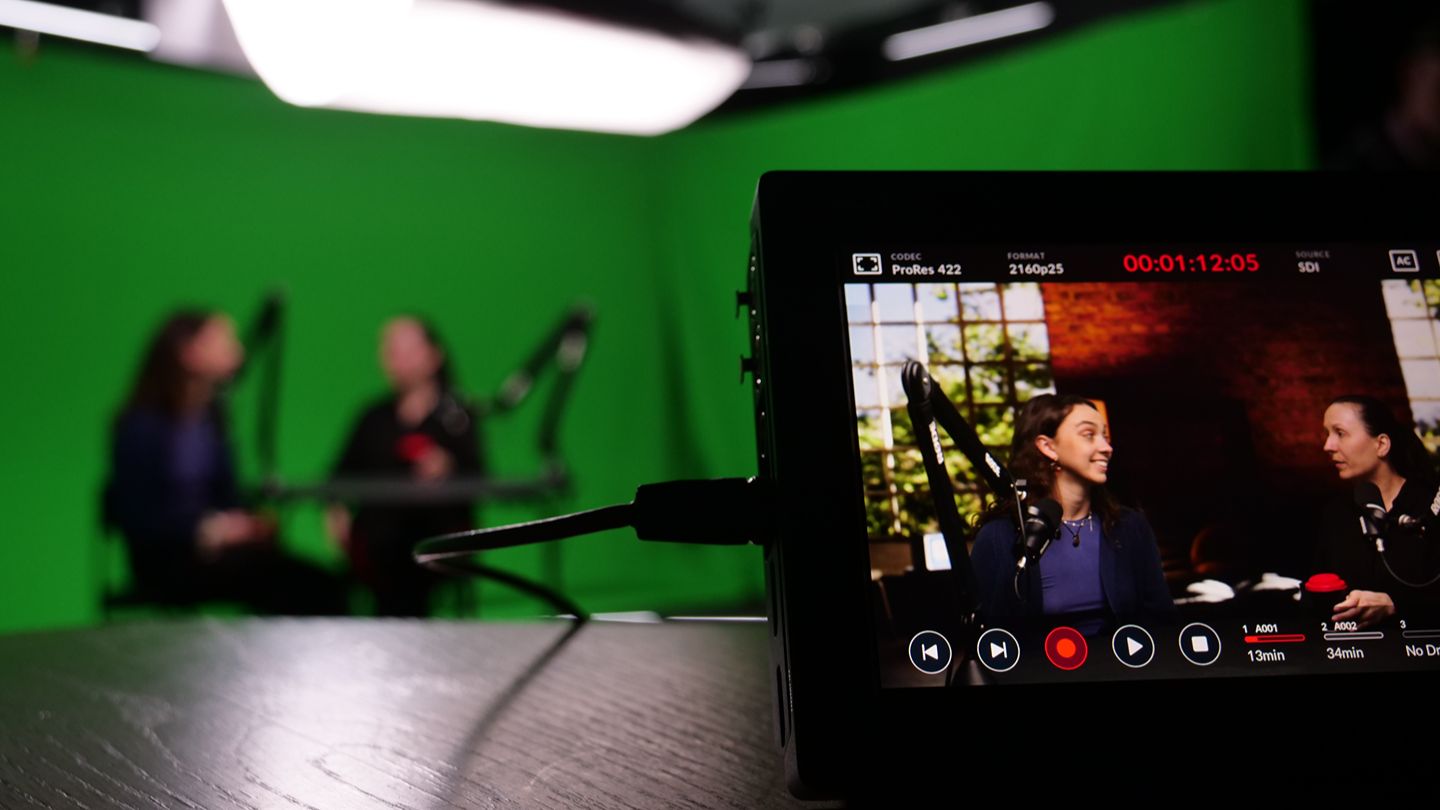
One podcast session can now feed a much wider content package spanning audio and video. Rob Chandler, Founder, CEO, The Dean Street Podcast Studio, explains how that changing demand shaped the studio he built in central London.
.jpg)
Innovation Awards: Collaboration and open standards triumph
The winners of the IBC Innovation Awards were revealed at an event at the Amsterdam RAI, honouring collaborative projects tackling some of the industry's biggest challenges.

.jpg)