Japan 2019 was the first World Cup to have an independent host broadcast operation. Previously responsibility had rested with the leading domestic broadcaster (as ITV did in 2015, for example).
World Rugby engaged HBS and IMG as joint partners to host the broadcast from Japan and handed HBS the sole contract for France, in part because HBS is a French-based outfit and at the time the decision was taken in 2020, Covid was still a major concern.

Proximity to venues, including the planned site of the IBC at Roland Garros, was one factor in HBS’ favour, as was its intimate knowledge of World Cup venues from its ongoing production of French soccer premier league La Liga.
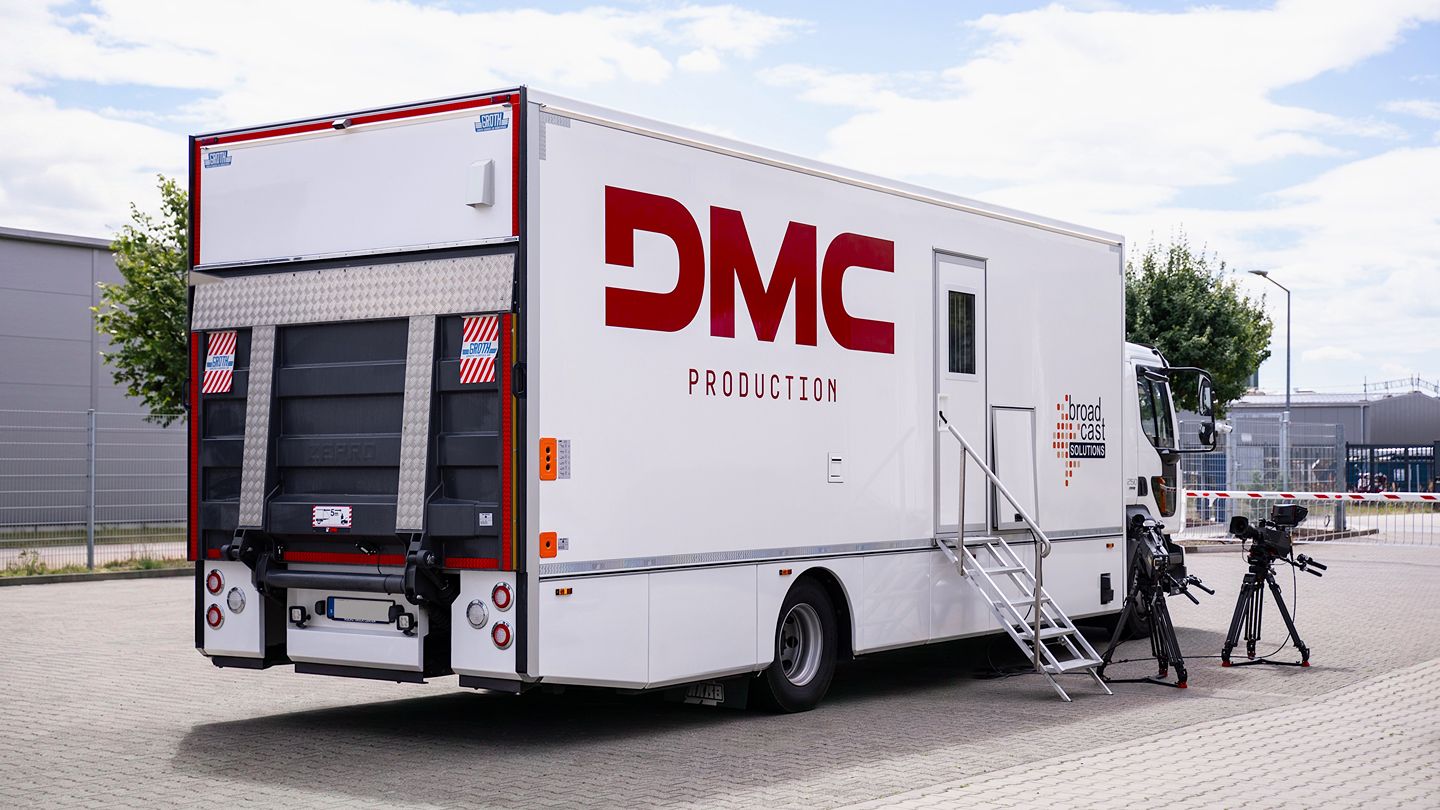
Remote production was an essential design requirement. IMG won the tender from HBS to provide all non-live production facilities.
This includes providing ten ENG crews to cover training venues, team hotels and press conferences and to feed that back to the IBC in Paris. The tender included the option of taking the entire production remote back to IMG’s HQ at Stockley Park.
“In Japan we had six ENG crew and that wasn’t quite enough to cover the distance between training grounds and match venues,” explained David Sheild, SVP Global Director of Engineering & Technology at IMG.
At the IBC, IMG provide HBS with staff to create all the preview material and digital highlight shows. This produced content is then sent via satellite to Stockley Park where it is held on a media server, along with all the live feeds and select archive where it can be accessed by rights holders.
The Media Server is based around 3 x EVS XT Via 12 channel servers and 528TB of dedicated X-store back-up. This allows approximately 2,500 hours of content to be stored and viewed by up to 200 users who can clip and request content. Content can be transcoded into four formats but is run in 1080p. In addition, IMG are providing a total 19 additional edit suites and produced the official radio world feed.
IMG performed a similar role for HBS at the FIFA Women’s World Cup. It built a dedicated area at Stockley Park to service the non-live production of the football with a specification that needed little moderation to facilitate the rugby. It also remotely produced the non-live content for the Uefa Euros in 2021.
IMG has also taken care of green shoots of all the players – the head and shoulders shots which are used to introduce each member of the squad.
“Most teams have their own green screen set up so these can be captured locally. In this case though there was a requirement not just for the players to take two steps to camera and fold their arms, but to get them to tell a joke or do something fun in order to feed social.”
You are not signed in
Only registered users can comment on this article.

RTS reveals Technology Awards 2026 winners
Evan Shapiro, ITN’s Jon Roberts, and On Air 2025 were among the winners of the RTS Technology Awards 2026.
.webp)
France Télévisions and TDF test 5G broadcast of Diagonale des Fous
For the mountain ultramarathon Diagonale des Fous, TDF has rolled out a 5G broadcast trial in partnership with France Télévisions, Antenne Réunion, and Web TV Grand Raid.
 (1).jpg)
CNN and Financial Times sign AI deal with Google
CNN has signed a strategic multi-year partnership with Google, which will see the organisation provide enhanced content rights for Google’s generative AI news product pilots.
 (1).jpeg)
150 students take over On Air 2026’s five-channel broadcast
On Air 2026 will see 150 students take charge of the Media Talent Manifesto (MTM) broadcast’s 24-hour culture, news, sport, film, and kids channels on 22–23 October 2026.
.jpg)
IBC calls for Challenge submissions for 2027 Accelerators
IBC has launched the official call for Challenge submissions for its 2027 Accelerator Media Innovation Programme.