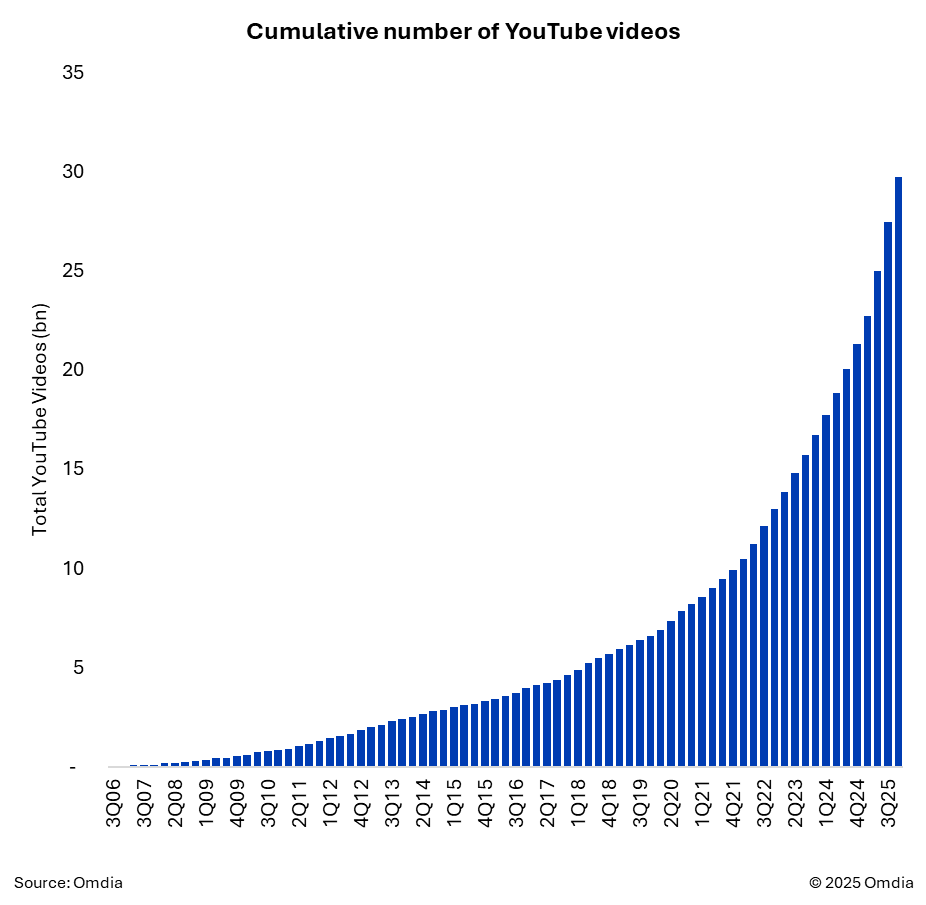
YouTube has reached 29 billion videos as of December 2025, with growth driven by Shorts, AI-generated content, and expansion in markets such as India, according to new research from Omdia.
The research concluded that YouTube is on track to reach 30 billion videos in early 2026.
It also found that YouTube’s growth is accelerating and is heavily driven by short-form video with Shorts – vertical, short-form videos up to three minutes long – now representing over 90% of all new uploads.
According to the report, the top 1% of videos on YouTube generate 91% of total viewing time while the remaining 99% account for just 9% of viewing. Despite this disparity, the research highlighted that this latter group still plays a critical role in the platform’s ecosystem.
Music and professional content dominate, Omdia discovered. Music videos account for 33% of all YouTube viewing time, while professionally filmed content makes up 46%.
Podcasts are also reportedly growing, with video podcasts representing 5% of total viewing. Further, news was the third most popular category, capturing 10% of viewing.
Daoud Jackson, Senior Analyst at Omdia, said: "Omdia research shows the least-watched 99% of videos account for just 9% of total viewing time. Yet, YouTube continues to host the equivalent of 280,000 years of video content, most of which is rarely watched – a fascinating aspect of the platform’s strategy.
“This content also forms the backbone of Google’s video training data for Gemini. While user-generated content drives perceptions of success, our research shows the reality is more complex. YouTube has become a highly diverse platform in 2026, with professional content, music, news, and podcasts all shaping viewing patterns.”
The BBC Group recently struck a deal to produce new programming for YouTube. Discover more here.
 (2).jpg)
Disney to buy $20m of Character.ai assets, following suicide allegations
As it files for bankruptcy, controversial AI company Character.ai has reached a $20m agreement with Disney affiliate Disney Worldwide Services over its assets.

Goalhanger launches creator-led media venture with Marina Hyde’s Always On
Podcast network Goalhanger has launched Goalhanger X, which the company describes as a new model for building “complete media ecosystems around exceptional creators.”
 (1).jpg)
Netflix reportedly preparing to lay off 5% of workforce
Netflix is reportedly planning a significant round of redundancies that could lay off approximately 5% of its headcount.
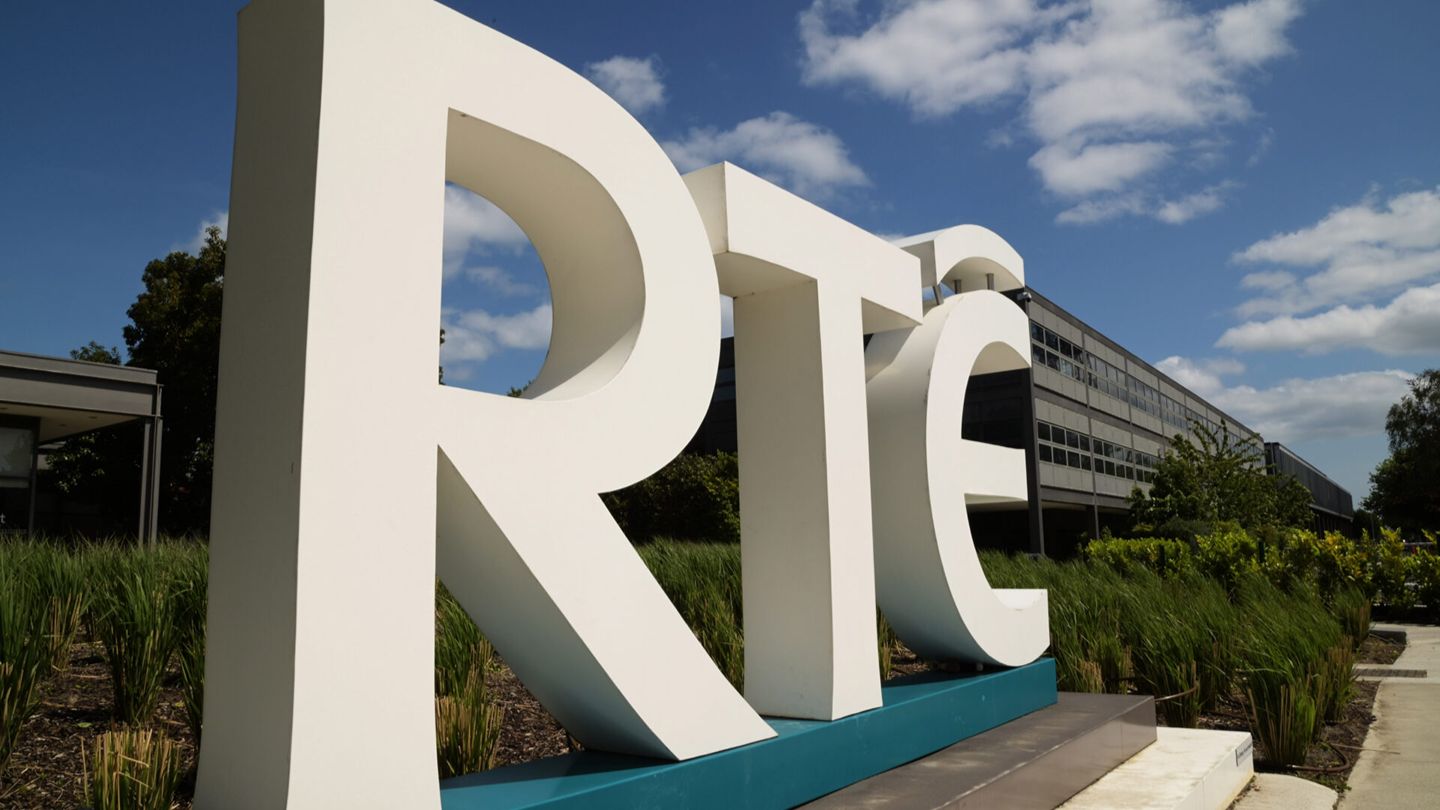
EBU protests funding cut for Irish broadcaster RTÉ
The European Broadcasting Union (EBU) says it is “deeply concerned” by the Irish government's decision to cut agreed public funding for public broadcaster RTÉ by €20m.
 (1).jpg)
Netflix names IMG as production partner for FIFA Women’s World Cup Brazil 2027
Netflix has appointed IMG as the production partner for its coverage of the FIFA Women’s World Cup Brazil 2027, set to take place from 24 June to 25 July 2027.
.jpg)
.jpg)