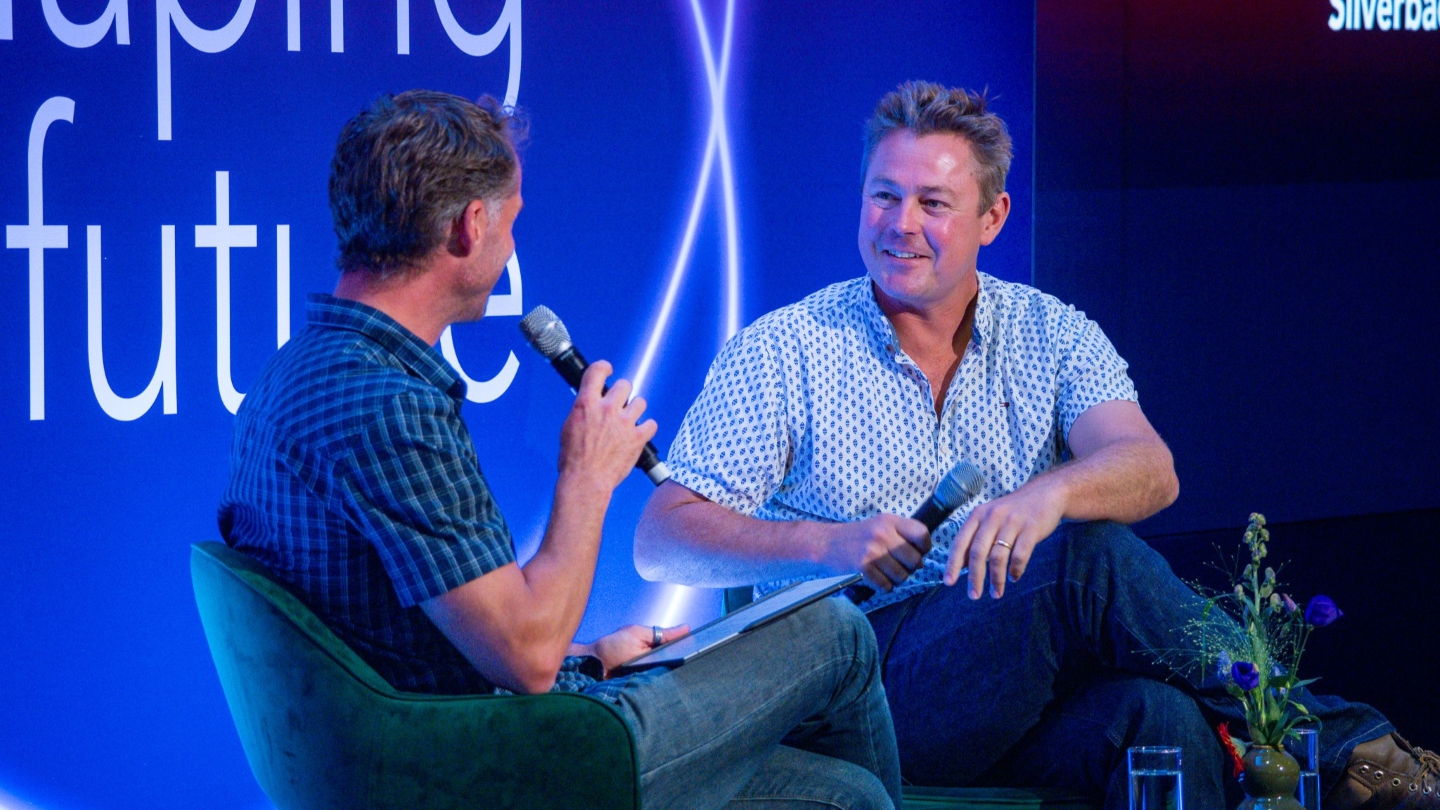
Silverback Films’ Jeff Wilson shared the challenges of capturing the untold story of animal parenthood, blending cutting-edge technology with timeless fieldcraft.
When Jeff Wilson set out to create Parenthood, a five-part BBC One natural history series, he knew he was treading new ground. “Amazingly, no one’s really done a series on parenthood before,” he said. “People tend to get distracted by cute babies, and so they make series on cute baby animals, but really, the protagonists of all of those stories are the parents. They’re the ones that make decisions – life and death choices – for their young.”
That premise led Silverback Films to invest three and a half years in creating a series that revealed parenthood as the ultimate evolutionary gamble. “We realised that we had this goldmine of really fascinating and interesting stories that we could tell,” he said.
The hippo and the lion
One of the series’ standout sequences follows a mother hippo leading her calf from the safety of water to graze, a nightly ritual that exposes them to lions. Capturing this story required a fusion of patience, prediction, and advanced imaging.
“This is behaviour that happens maybe once a season,” said Wilson. “You have to be absolutely on the money to be there in the right place at the right time, because the whole shoot will fail if you don’t get it.”
The team shot in infrared (IR) using a modified Merlin camera mounted inside a Shotover F1 gimbal. “You’re not working with available light, you’re working with a heat signature,” he said. “So, if there’s a bush in the way, it doesn’t really matter. That opens up some of the possibilities.”
But the technology pushed back. “It’s incredibly power hungry. You have to hook up a series of car batteries and run those on constant charge. It generates a lot of its own
heat. We reimagined the housing, opened it up to let air through, and blew air in to cool it down. But of course, that sucked in dust. You’re dealing with parameters that are working against you the whole time.”
The social spiders’ sacrifice
Not all sequences required military-grade cameras; some demanded extreme close-up work. Wilson highlighted the African social spider, filmed in Namibia.
Filming animals the size of a grain of sand required ingenuity. “We’re using flower lenses, big probe lenses, Nikon macro lenses that give you a one-to-one scale conversion, all filmed on a Red. But that in itself doesn’t necessarily get you the behaviour. You have to work out within a 3D world how to get something into the plane of focus, which is less than a couple of millimetres.”
Wilson admitted the location – a fly-ridden pig farm – was “by far the worst” of his career, but the resulting sequence became one of the most talked about in the series.
Orcas at speed
The series also captured orcas off Western Australia teaching their young to hunt blue whales – another first. “What you’ve got to work out is how to stick with orcas that are moving in 12 to 15 knots underwater,” Wilson explained. “No one just wants to see a fin above water and a couple of drone shots. You really want to be underwater with them.”
The solution was a custom underwater gimbal and redesigned camera housings. “You can manoeuvre yourself in front of the orcas when they’re traveling. They basically pull the camera two or three feet in front of them. You get these amazing shots of the orcas coming towards camera.”
Fieldcraft first
For all the emphasis on technology, Wilson insisted that success in wildlife filmmaking depends on something older. “The thing that actually gets you in the right place at the right time is fieldcraft,” he said. “We were dealing with perhaps the most sensitive subject matter in the natural world, the relationship between a parent and their offspring, and no amount of technology can get you those intimate moments. Fieldcraft comes first, and technology is always secondary to that.”
.jpg)
Call my agent: Agentic AI begins buying media advertising
AI agents have the potential to automate media transactions at scale, but today’s focus is less about fully autonomous workflows and more on experimentation and efficiencies.
.jpg)
NAB Show New York: The stakes could not be higher
As media, technology, and politics become increasingly intertwined, the stakes extend far beyond the balance sheet.
.jpg)
6G-Holonet: Bringing Star Trek’s comms system to reality
As the 6G-Holonet project sets its sights on live entertainment, cultural heritage sites, and immersive media, Alex Buchan, Chief Technology Officer, DTG, reveals the key technological considerations that have ensured the project’s impact.
.jpg)
ULL-timate goal: How streamers are prioritising ultra-low latency
With audiences expecting instant global information, and broadcasters competing against social platforms that deliver clips within seconds, the race is on to deliver ultra-low latency (ULL) as a competitive edge.
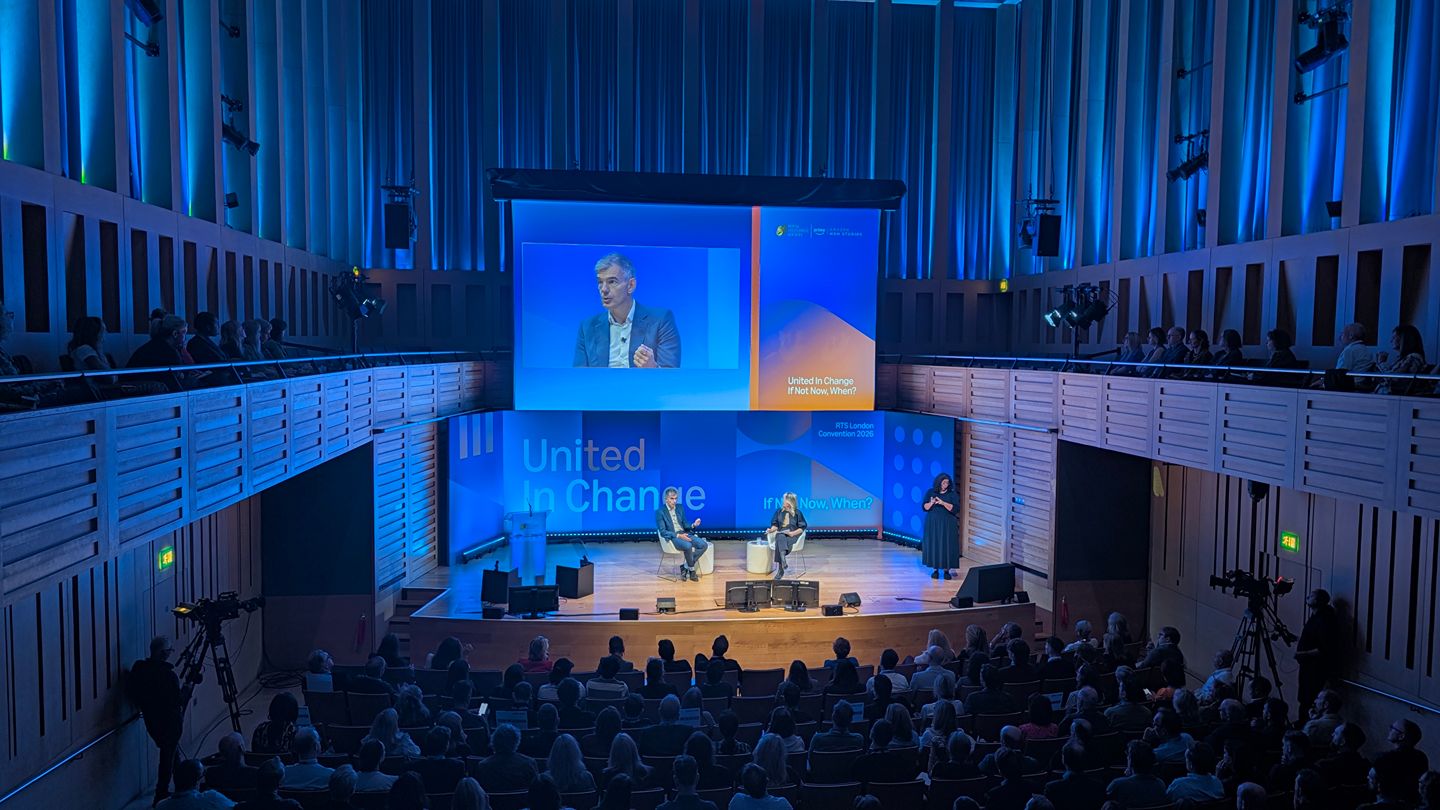
RTS Convention: “The prize for standing still simply isn't an option”
AI was largely sidelined at the annual RTS gathering where the fate of public service media took precedence. Adrian Pennington reports.