At IBC2026, the leaders of the EIT Culture & Creativity, the European Innovation Council, and ORF gathered to explore how broadcasters can strengthen Europe's competitiveness in the creativity market, amid intensifying competition from AI and international powers.
Europe is good at inventing and scaling to a certain extent, but is lacking Series A and Series B rounds of funding, which is where the North American market has an advantage, according to Anette Schaefer, CEO, EIT Culture & Creativity. “We need to build an environment to allow companies to truly scale in Europe and globally,” she said. “We have the ideas and great research from our university partners, but the monetisation is often lacking.”
The "Can Europe Build the World's Next Media Innovation Ecosystem?" conference session also revealed that the European investment ecosystem is quite fragmented, with Nordic expertise known for gaming, Italy for fashion, and France for audiovisual. “We must connect the investment communities, start-ups and scale-ups; this will enable the creation of more sustainable businesses in Europe,” said Schaefer.
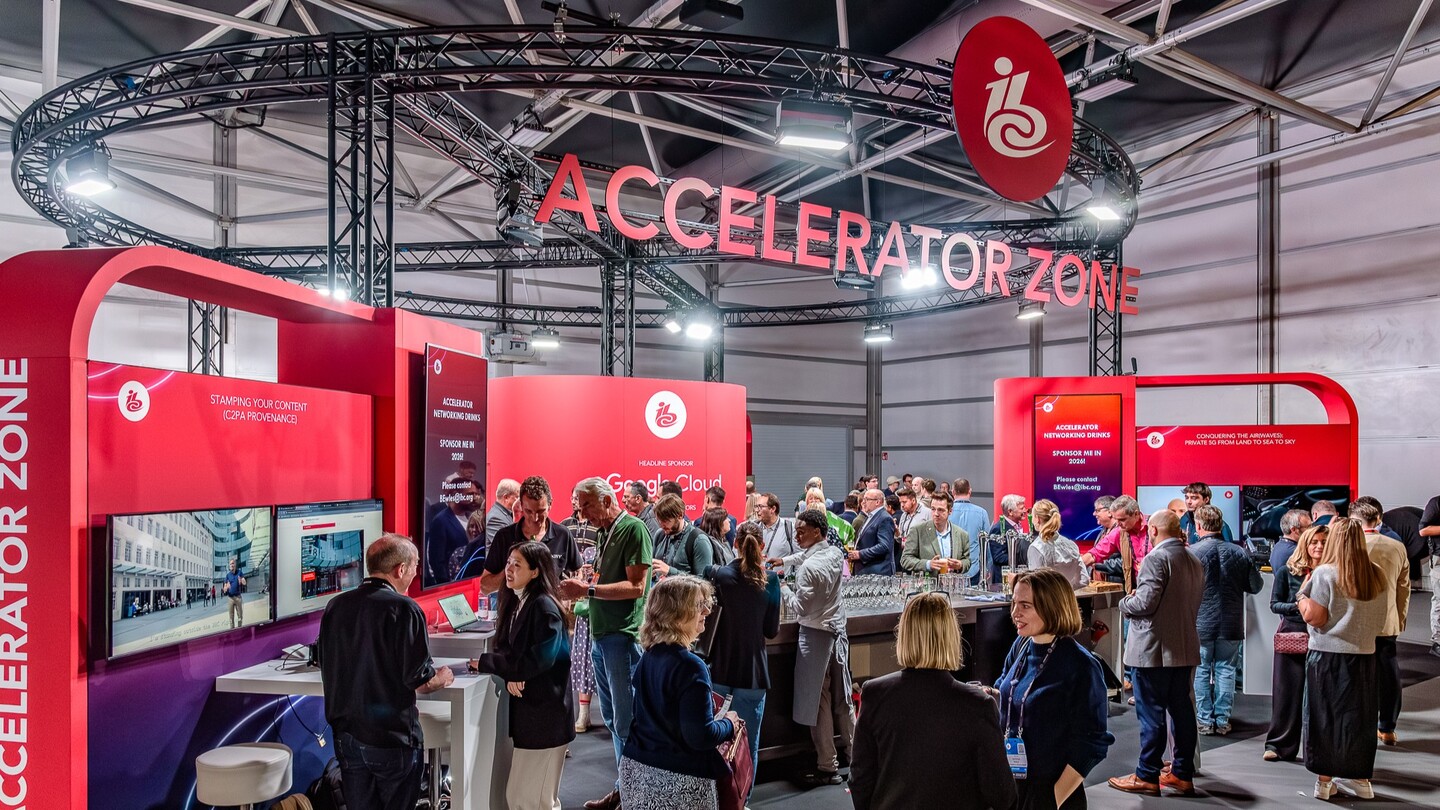
This session marks EIT Culture & Creativity's introduction to IBC as European Innovation Partner. The organisation brought its ecosystem of start-ups to the show. “The IBC Accelerator programme is a perfect example of how you can scale and accelerate start-ups, making the industry more aware of existing programmes and allowing them to connect to potential future partners,” added Schaefer.
As the venture arm of the European Union, the European Innovation Council carries an €11bn fund to fund grants and equity, is supporting 1400 projects and, so far, 400 companies in an equity stage across the whole spectrum from quantum to biotech for health, according to Michiel Scheffer, Board President, European Innovation Council.
.jpg)
“Our media portfolio is quite small, but our AI portfolio is substantial,” said Scheffer, who noted that there might be spin-offs offering techniques from other industries that could be used in media. “We try to organise connections to see where unforeseen parallels are possible. Right now, Europe is conscious of its vulnerability and of the need to strengthen our strategic autonomy if we are to control our space and our media, and there are technologies enabling that.”
The regulatory landscape is one of the things holding Europe back when it comes to great collaborative technology. “If you want to grow, you may have an issue setting up a new company in a new market,” explained Schaefer. “We need to lower these entrance barriers, as well as access to capital.”
The age of AI is not just the provision of the young, argued Stefan Kollinger, Chief Innovation Officer, ORF, Chair, EBU AI Accelerator, ORF. “The last two decades in the media industry have been very vendor-driven, and we may be at the start of a new era of building things. This industry needs real expertise in various domains who can use technology to upskill and to create new things.”
The speed of innovation is accelerating every month, he added. “The question is, will the organisations, in terms of governance and anticipating processes, be able to extract the value that is created by their own people?”

IBC2026 Live Blog: Catch up with all the best innovations
Welcome to the IBC2026 Live Blog, getting under the skin of the global media and entertainment industry's biggest and best trade show.
.jpg)
FAST is the next frontier of creator domination
The creator economy is no longer a sideshow in Free Ad-Supported Streaming TV (FAST) but a core channel segment with platforms actively competing for content.
Global student On Air project is already igniting careers
On Air, the global student‑run broadcast initiative, is scaling up in its second year.
.jpg)
The pull era: Why media survival hinges on the phone-centric consumer
To survive, this industry must redefine broadcast, move beyond defunct binaries like "TV viewer" and "mobile user", and put its consumer at the centre of every decision, according to Evan Shapiro's rapid-fire talent programme keynote on the Future Tech Ignite stage.
.jpg)
LA28 set to rewrite the broadcast rulebook
The Los Angeles 2028 Olympic Games are set to become the largest broadcast operation ever attempted.
.jpg)
.jpg)