 (2).jpg)
IBC2026 session report: Over half of this industry’s workforce is currently out of work in the UK, according to recent research by ScreenSkills.
The reasons are varied but include dropping levels of investment in local production within the UK. “It’s a strange dichotomy that we live in an age of massive content needs, but that at the same time budgets and crews are being cut,” reacted Stuart Ray, Head, Skills and Development, IAMT. “There’s more work wanted for fewer people for less money.”
Skills are currently lacking in our industry in the areas of AI, business, and finance, according to Lisa Opie, Chair, ScreenSkills. “This is an issue in terms of personal development for our workforce. We have skills provision happening throughout the landscape, but I think alignment is critically important.”
It’s also crucial to think of the entire career of people in our sector, she added. “We must ensure there are entry pathways that are industry aligned, and then the right professional development to allow people to build themselves a career. The holistic approach is really important.”
Recent IAMT numbers showed that in the last two years, companies have been finding it a little easier to recruit the right talent, with 12% of companies now saying they are finding it easy. The skills gap has also dramatically evolved. “Two years ago, AI barely got a mention, and now it has gone straight to number one, while all other skills have remained fairly level,” noted Ray.
Polly Hickling, VP Education, SMPTE, highlighted major differences between the pathways taken by those over 65 compared to those entering the industry today. “The older generation is less likely to have been to university and the 27% that did were more likely to have studied electronic engineering and had first roles linked to training delivered by the BBC,” she said. “As the ages move down, people are more likely to have studied topics linked to the industry like broadcast engineering or media technology.”
Nowadays, those just starting their careers are much more likely to have been to university, to the tune of 69%. However, the SMPTE survey also highlighted that universities are struggling to get support for the degrees that are in industry-related topic areas. “They are facing cuts, redundancies and funding issues,” added Hickling. “The training pathways that once existed don’t exist anymore, and the courses that do exist are really struggling to get support.”
There is a real need to think more constructively about how university and industry work together to create real pathways into the sector, concluded Opie.
.jpg)
Call my agent: Agentic AI begins buying media advertising
AI agents have the potential to automate media transactions at scale, but today’s focus is less about fully autonomous workflows and more on experimentation and efficiencies.
.jpg)
NAB Show New York: The stakes could not be higher
As media, technology, and politics become increasingly intertwined, the stakes extend far beyond the balance sheet.
.jpg)
6G-Holonet: Bringing Star Trek’s comms system to reality
As the 6G-Holonet project sets its sights on live entertainment, cultural heritage sites, and immersive media, Alex Buchan, Chief Technology Officer, DTG, reveals the key technological considerations that have ensured the project’s impact.
.jpg)
ULL-timate goal: How streamers are prioritising ultra-low latency
With audiences expecting instant global information, and broadcasters competing against social platforms that deliver clips within seconds, the race is on to deliver ultra-low latency (ULL) as a competitive edge.
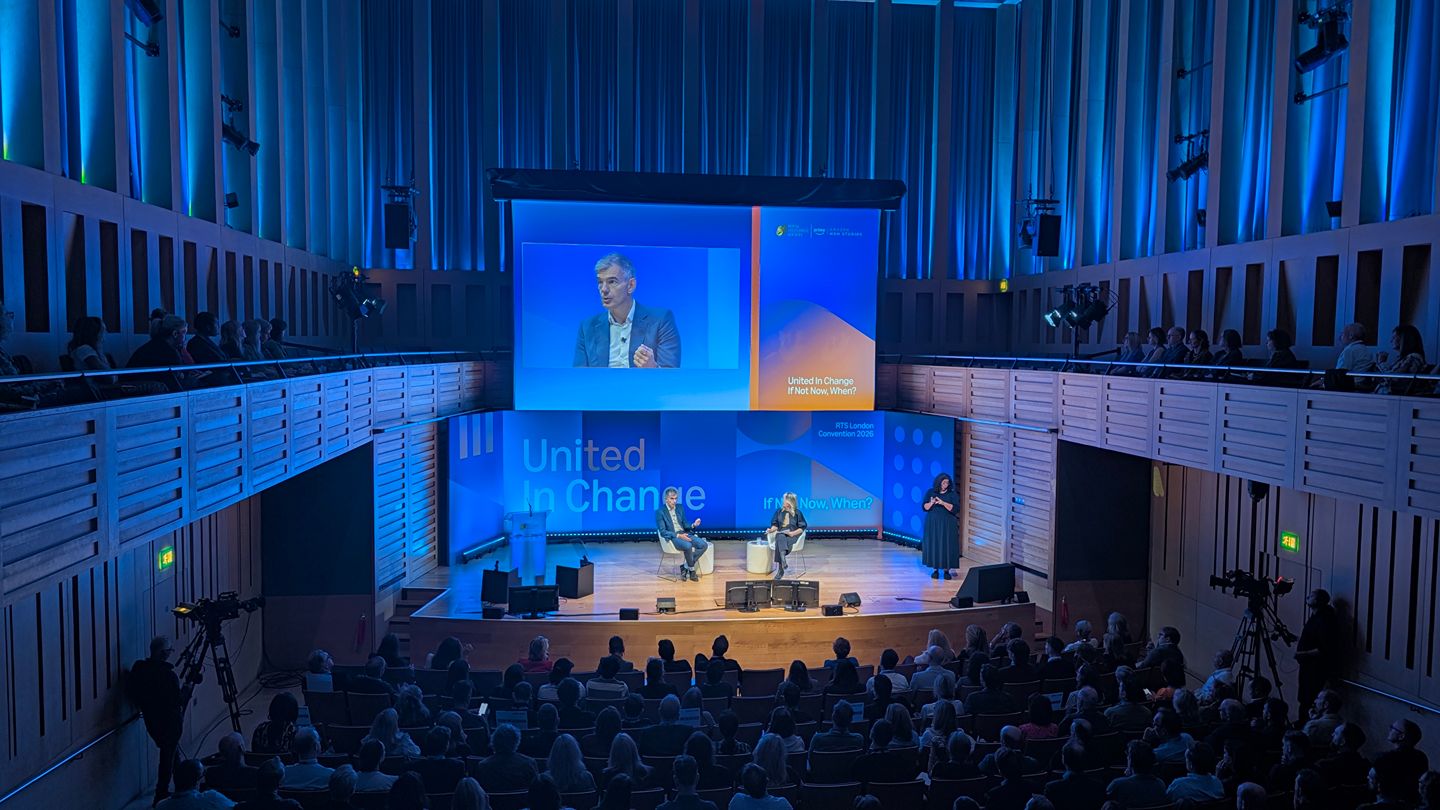
RTS Convention: “The prize for standing still simply isn't an option”
AI was largely sidelined at the annual RTS gathering where the fate of public service media took precedence. Adrian Pennington reports.
 (1).jpg)