

With an eye on the future, this IBC Accelerator plans to move beyond isolated use cases and demonstrate how agentic AI can be applied across the full live media value chain, from automated production tasks to highlight generation, personalisation, and monetisation.
Artificial intelligence has been used in broadcasting for years, handling tasks including speech-to-text transcription, media indexing, recommendations, and automated metadata. More recently, generative AI has opened up further possibilities around content creation, localisation, and summarisation. However, many of these applications remain separate. Meanwhile, live production continues to involve multiple systems and significant manual intervention.
The IBC2026 Accelerator project, “AI for Live Sports and Beyond: Rewiring live media via Agentic AI Orchestration and ‘meCast’”, is exploring the use of AI across live media workflows, with a particular focus on combining different processes.

For Nivendran Veerappan, Vice President and Head of Broadcast and Platform Engineering at Astro, the starting point is the complexity of media processing, live production, and beyond. “We are leveraging AI and GenAI for parts of the content supply chain and live events,” he says. “We initially started with localisation, content production and content editing workflows, and have since expanded into live production use cases such as automated highlights creation.”
He continues: “Live sports is a key part of Astro’s business, and we are continuously exploring how AI can enhance both live and non-live operations. Astro operates across Pay TV, OTT, digital platforms, live sports, and content production, so we deal with a significant volume of live events and incoming channels from international broadcasters and content partners. We operate a portfolio of thematic channels, while also producing our own packaged channels and local sports events. In addition, we syndicate content and manage our own playout, packaging, and distribution workflows. The goal is to create a unified, AI-driven content supply chain that can orchestrate multiple AI agents across live production, localisation, metadata generation, and content distribution workflows”
Automation is already part of these workflows, but Veerappan sees opportunities to take it further. He explains: “We have a certain level of automation in place for the end-to-end content supply chain and live events, so we have several use cases where processes have already been automated. We have also started leveraging AI and Gen AI for parts of the media supply chain across the media supply chain such as automated poster creation, contextualisation, metadata tagging, vertical video for micro drama, and localisation.”
“However, these workflows remain siloed, highly complex, and heavily reliant on manual intervention. We deliver content to multiple platforms, including Pay TV (satellite and IP) and OTT. Each has its own requirements. Also, we need to ask: ‘How do we create highlights?’ ‘How do we extract metadata efficiently?’ Many of these tasks are still performed manually today, with some areas assisted by AI. That is why we started looking for a single platform that is fully automated and AI-driven, enabling us to optimise resources and address a wide range of use cases. That’s how we started this entire project.”
The approach also needs to accommodate a rapidly changing range of AI technologies. “The technology we’re looking at needs to be highly flexible, so that we are not limited to a single solution from an AI perspective. Different large language models (LLMs) and AI technologies should be plug-and-play, allowing us to evaluate and adopt whichever solutions are the most mature and effective,” emphasises Veerappan.
Bringing the workflow together

Lekshmy Sasidharan, Consulting Partner for Media and Entertainment at TCS, sees the project in the context of AI initiatives already underway across the industry. “When we look at Media and Broadcasting industry leaders, some of who are champions on this IBC Accelerator project, such as Astro or ITV or Middle East Broadcasting Corporation or as we look at TCS’s own Media and Broadcasting customers, we see these leaders across the globe are also starting some of these very relevant AI projects, but mostly in silos.”
“What we found was this: the agentic orchestration provided us a right inflection point to unify these workflows,” she says. “For example, you have your production, your pre-production, and your post-production, distribution, and personalised engagement stages. Even when enterprises were initiating AI projects, we were probably creating a localisation agent in one side, we were doing a moderation agent in one side, or a highlights agent separately. The difference in the way we were looking at the problem statement for an example for an Astro, ITV or another enterprise is as to how will you do it unified, end to end, which is key, and which is what we are driving.”
“The other key element of the project is personalisation,” says Sasidharan. “Basically, contextualising the content to the viewer’s persona,” she says. “It could be the same World Cup match watched by two people in two geographies in two different languages. It could be two different age groups, people in the same geography watching, and they have different players who they are interested in. So, we were thinking about how you personalise - maybe it is something around personalised highlights for the user, or you can even create dynamic fast channels, based on what each user wants.”
Assistive to autonomous
Sasidharan describes the development of AI within workflows as a progression from assistive applications towards greater autonomy. “We see the industry evolution of AI use cases started originally with assistive use cases where you’re using AI agents to maybe make something easier. You’re searching for certain content and have a chatbot, which interacts and gives you some information. From there, we went to the augmentative side where you are creating a highlight or creating localised content. But it’s still not end-to-end integrated.”
“We are going into the autonomous phase where we are saying that now you are not only making the agent do the job; they have to make the decisions, and then they have to connect across multiple pathways,” she says.
Those pathways can vary between broadcasters. “Whatever one Media organisation wants to do as a workflow might not be necessarily what another organisation wants to do,” she says. “Their compliance policies might be different. Their language requirements might be different. So, when we say an autonomous agent, we want, starting from the orchestration itself, to have that intelligence to understand what workflows and outcomes to achieve. Let’s first of all work with the humans and decide the workflow and the possible pathways.”
Sasidharan sees editorial involvement continuing even as more of the process becomes automated. “You have your editor, your studio managers, your years of expertise and creative talent who have some of the best insight to provide. The AI can intelligently automate a significant amount of the process and decision-making. But then, even when we go autonomous, when we are in an industry like media the seamless collaboration with the humans involved in the flow is critical. For example, we want the agentic intelligence giving options to the editorial team to pick and choose. Instead of you spending multiple hours to create the highlights of a match or something of that sort, the agent could provide multiple highlight clips to select from in maybe a couple of minutes or so, but you choose whichever options you want and curate and refine that as required.”
An agentic orchestrated workflow with localisation and moderation agents collaborating with each other and the humans involved is one example of where different processes could be connected. “The orchestrator is saying that our story is delivered in Tamil, in Malaysian, and in Chinese. So autonomously you're able to orchestrate that workflow where it automatically decides the translation can be done by the agent, but we want the human in the loop to validate the final output that ‘okay this aligns with my vision.’ Similarly, the moderation agent should check for alignment on compliance and content policies for each region,” she says.
Veerappan also emphasises the importance of retaining people within the workflow. “I think the objective when we build an agentic AI unified platform is mainly to address the repetitive tasks that don’t require human creativity. It’s how we actually unify the live workflows end-to-end, blending with human creativity. Because at the end of the day, we still need to have that human touch.”
“The routine tasks will be done by AI and unified workflow, but human creativity will make the final decision based on the available. For example, viewership insights such as who is watching and where content is being consumed. Based on that, teams can make informed decisions. We also believe in keeping humans in the loop, especially where approvals, editorial judgement and governance are required. AI can automate repetitive tasks, but human oversight remains essential. Teams may decide to create vertical-format content for OTT and mobile platforms, or prioritise highlights packages around key moments and audience demand,” he says.
Working together
The Accelerator is designed to bring together broadcasters and technology companies with different operational requirements and areas of expertise. For Veerappan, that variety has been one of the primary benefits of the project. “The exchange of ideas is key. People bring different perspectives, because not all the operations are the same. Not everyone relies on the same technology stack. That’s where the ideas come in. Because one technology or one solution or one vendor doesn’t fix the entire problem.”
The work will culminate in a Proof-of-Concept demonstration at IBC in Amsterdam. Sasidharan says the TCS team is concentrating on the end-to-end orchestration, semantic intelligence and highlights, personalisation and Responsible AI aspects of the project. “We expect to demonstrate how the view can vary according to personas - it could be some reels; it could be some personalised highlights or engagement analytics.”
The proof of concept is also intended to help identify practical limitations and a way forward. “I am sure that it will also kind of reveal some of the challenges in terms of what is stopping us currently,” she says. “You might be technically able to accomplish the capabilities, but there might be considerations around latency, the cost of doing it, and various other aspects which will need innovative solutioning approaches. I'm hoping that this will also give people a bit of indication on what problems that we need to address to get to the next level. This is obviously going to be an initial view of what is possible, and we expect it to provide valuable insights into potential pathways for future operational adoption.”
For Veerappan, establishing the orchestration layer is the initial objective. “How do we introduce that orchestration layer that can leverage different AI agents? As we use multiple technologies and platforms, there will inevitably be integration challenges. I think that the key question is whether we can build a unified platform that can easily accommodate any technology or agents introduced in the future. If we build this foundation, then future improvements and innovation will become much easier. That’s the breakthrough we need to demonstrate at IBC.”
John Maxwell Hobbs recently investigated the IBC Accelerator project that set out to meld immersive technology and audience interaction into an entirely new form of audience engagement. Discover more here.
Headline Sponsor:
Google Cloud
Associate sponsors:
HP
AMD
Shure
Champions:
Astro Malaysia
ITV
Participants:
Admongrel
AWS
Camb.ai
Dalet
Shure
TCS
.jpg)
ULL-timate goal: How streamers are prioritising ultra-low latency
With audiences expecting instant global information, and broadcasters competing against social platforms that deliver clips within seconds, the race is on to deliver ultra-low latency (ULL) as a competitive edge.
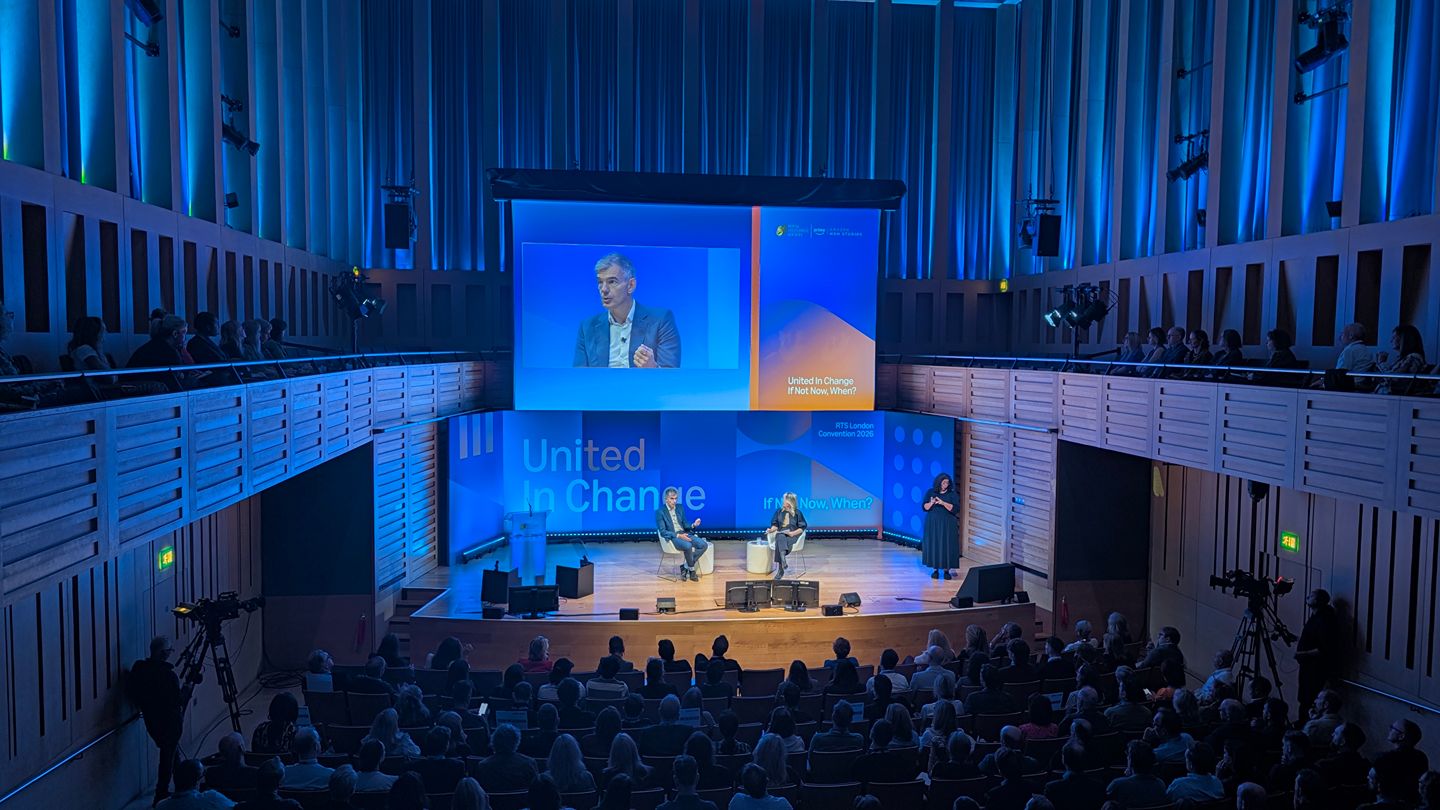
RTS Convention: “The prize for standing still simply isn't an option”
AI was largely sidelined at the annual RTS gathering where the fate of public service media took precedence. Adrian Pennington reports.
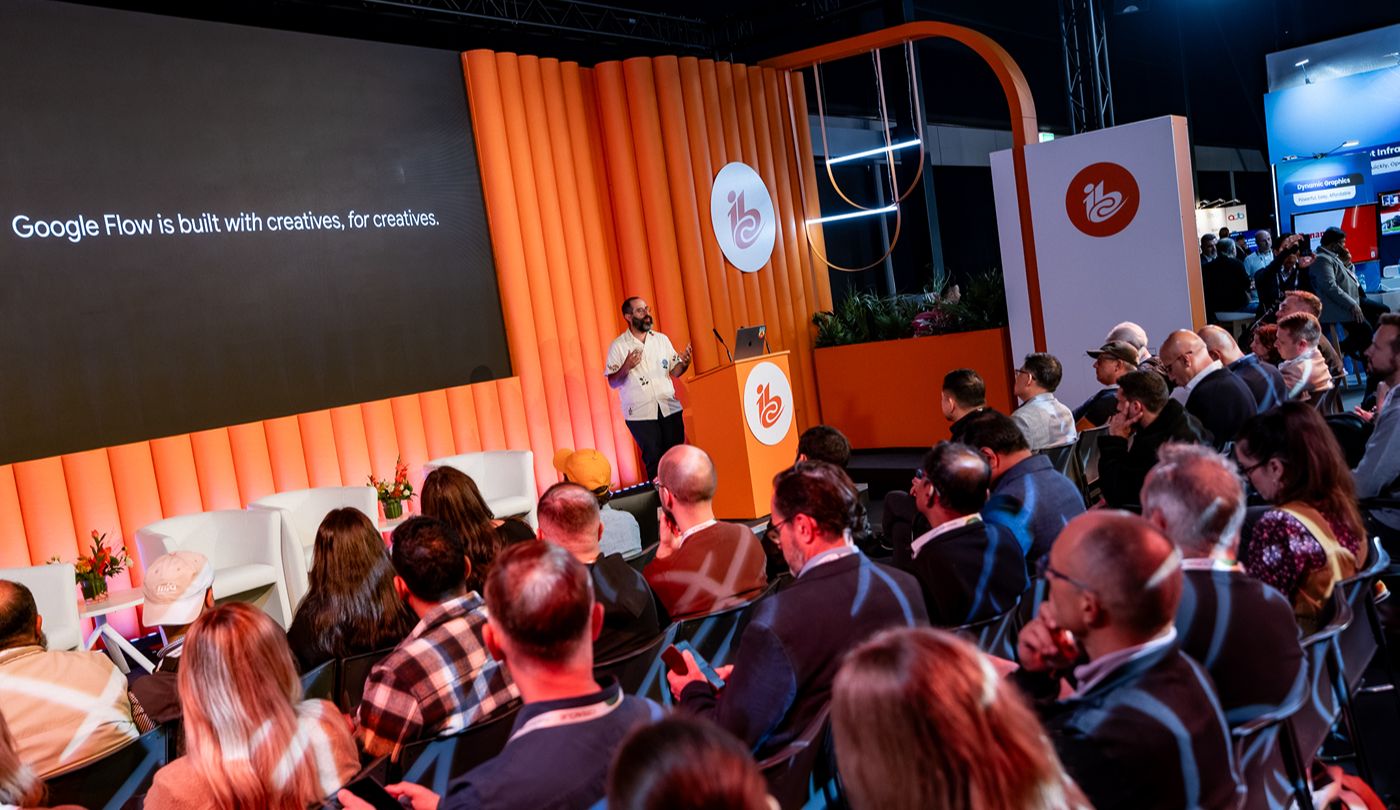
Content Everywhere at IBC2026: AI moves from hype to action
Companies from across the Content Everywhere ecosystem highlight what they see as some of the most promising industry developments at IBC2026, while calling out areas where they think the industry has room for improvement.
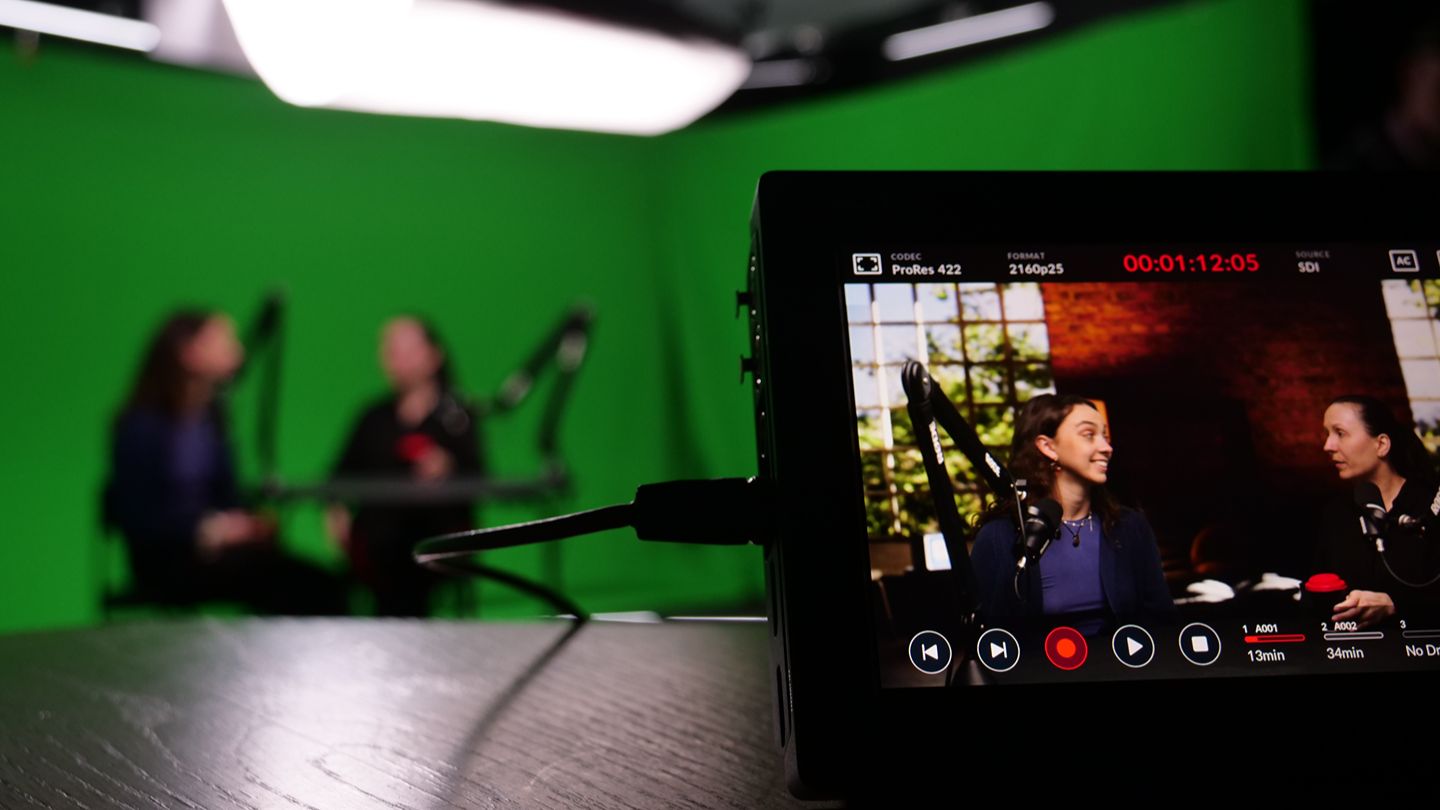
How virtual sets are changing the shape of podcast production
One podcast session can now feed a much wider content package spanning audio and video. Rob Chandler, Founder, CEO, The Dean Street Podcast Studio, explains how that changing demand shaped the studio he built in central London.
.jpg)
Innovation Awards: Collaboration and open standards triumph
The winners of the IBC Innovation Awards were revealed at an event at the Amsterdam RAI, honouring collaborative projects tackling some of the industry's biggest challenges.
.jpg)

.jpg)