
The Federal Communications Commission has ordered The Walt Disney Company, American Broadcasting Company, and television subsidiaries to file early license renewal applications for their television stations.
According to Reuters, the reviews were not supposed to begin until October 2028 but were prompted by a year-long probe into the FCC's ban on unlawful discrimination. Now, Disney must file its applications by 28 May 2026.
The move comes just days after the American Broadcasting Company (ABC) Presenter Jimmy Kimmel joked about First Lady Melania Trump.
Kimmel jested that Melania Trump had “the glow of an expectant widow". Days later, a gunman opened fire at a gala dinner at the Washington Hilton. The US president and his wife were evacuated safely. However, Trump called his late-night sketch a "call to violence" and called for the late-night host to be fired.
On his Monday show, Kimmel explained the joke “obviously was a joke about their age difference… a very light roast joke about the fact that he's almost 80 and she's younger than I am.” He went on to say: “It was not by any stretch of the definition a call to assassination… I've been very vocal for many years speaking out against gun violence in particular."
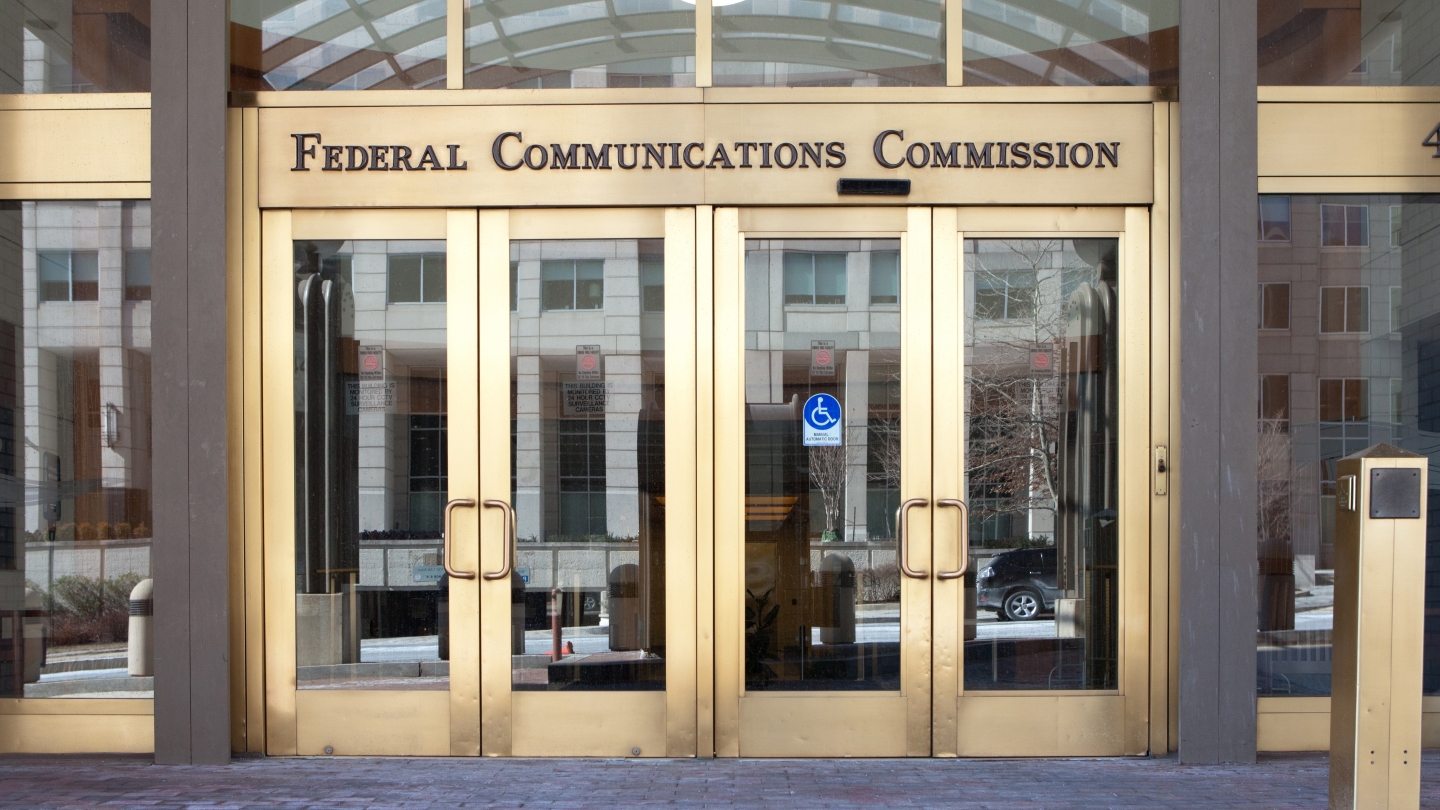
Speaking to IBC365 on the wider implications of the FCC’s move, Katharine Sarikakis, Full Professor, Chair of Media Governance, Organisation and Media Industries at the University of Vienna, comments: “The FCC’s order marks a dangerous erosion of regulatory independence… Such a move is a clear weaponisation of the licensing process. It transforms the FCC from a neutral arbiter of public interest into an instrument of political retribution. By conflating corporate HR policies with broadcast compliance, the administration tests the limits of the Communications Act, creating a chilling precedent where regulatory survival depends on political alignment rather than legal merit.
“From a European perspective, this escalation seems to demonstrate the fragility of media freedom… [and] democratic governance. While the EU relies on frameworks like the Audiovisual Media Services Directive to protect pluralism, the US crisis highlights a global vulnerability: the reliance on institutional norms rather than ironclad statutory barriers to prevent executive overreach. For the world, it signals that media independence is not guaranteed by market size, reputation, or historical prestige.
“Yet… the controversy reaffirms the enduring power of comedy. Kimmel’s jokes, capable of provoking a federal regulatory assault, demonstrate that satire remains a potent check on power, influencing the political discourse. Certainly, the administration’s disproportionate response inadvertently validates the comedian’s reach, proving that in an era of media concentration, humour remains one of the few forces capable of destabilising authoritarian impulses. It also demonstrates the fragility of the government itself.”
Deliberating on this point and the heated nature of the exchange, Daoud Jackson, Senior Analyst at Omdia, adds: “President Trump has made it clear throughout his political career that he watches a lot of television. He has also made it clear that he has never liked Jimmy Kimmel. Likewise, Kimmel has made it clear that he is not a fan of President Trump. The noises from both parties have been consistent, which has led both to appear tone-deaf.
“Unlike a great many people who have frustrated President Trump, removing Kimmel directly has proved impossible; thus, the approach taken has been to maximise the pain for Disney and ABC of retaining Jimmy Kimmel. Brendan Carr has shown greater willingness to launch investigations than Ajit Pai did as head of the FCC in the first Trump Presidency. The early renewal of licences is likely to go ahead, and the overall process will involve years of complex legal wrangling inside the FCC’s process. This process will be painful, time-consuming, and costly for all involved, which appears to be very much the point."
In a statement, David J. Brown, Chief of the Video Division at the FCC’s Media Bureau, wrote: “The FCC has been investigating The Walt Disney Company, its American Broadcasting Company, and its subsidiaries (collectively, “Disney’s ABC”) for compliance with its obligations as a licensed broadcaster. Specifically, the FCC has been investigating Disney’s ABC stations for possible violations of the Communications Act of 1934 and the FCC’s rules, including the agency’s prohibition on unlawful discrimination. While Disney’s ABC has purported to respond to two FCC Letters of Inquiry (LOIs) as part of this investigation, the FCC has determined that additional actions are appropriate at this time.
“Specifically, FCC rules provide that whenever the FCC regards an application for a renewal of a license as essential to the proper conduct of an investigation, the FCC has the authority to call the broadcaster’s licenses in for early renewal.1 Doing so both allows the FCC to conduct its ongoing investigation and enables the FCC to ensure that the broadcaster has been meeting its public interest obligations more broadly.
“The FCC determines that calling in Disney’s ABC licenses for early renewal, at this time, under the Communications Act’s public interest standard2 is essential within the meaning of agency regulations. Therefore, Disney’s ABC is hereby directed to file license renewals for all of their licensed TV stations within 30 days--in other words, by May 28, 2026.”
A federal US judge has ruled that an executive order by President Trump to defund public broadcasters NPR and PBS violated the First Amendment and is "unlawful and unenforceable." Discover more here.
/2. Channel 4.jpg)
Channel 4 launches instant advertising platform
Channel 4 Sales has launched Instant Re4ch, an advertising proposition intended to offer prioritised planning across Channel 4 Sales' portfolio, guaranteeing peak spots across Channel 4, Paramount, and UKTV channels on the same evening.
.jpg)
Netflix scores exclusive rights to 2030 World Cup in Spain
Having secured exclusive rights in Spain and Andorra to the 2030 World Cup, Netflix will show the men's football tournament for the first time.
 (2).jpg)
Ben Frow, Head, Channel 5, to step down
Ben Frow will step down as Paramount UK’s Chief Content Officer next year, after 14 years of overseeing Channel 5 and its digital brands.
 (2).jpg)
UK “minded to intervene” in Sky-ITV deal
UK Culture Secretary Lisa Nandy has said she is "minded to intervene" in Sky’s £1.6bn deal to buy ITV's media and entertainment division.
.jpg)
BBC News channel launches on YouTube in the UK and USA
The BBC has revealed that its BBC News channel will stream live on YouTube in both the UK and the USA from Thursday 15 October 2026.