
.jpg)
The IBC Technical Papers Programme features original, novel research on solutions to real-world problems faced by the international broadcast and digital media industry.
Papers cover all industry sectors across the media, entertainment, and technology industries and are delivered by a mix of industry professionals, academics, and R&D experts.
IBC’s renowned Technical Papers were presented in thematic sessions delivered across IBC2025, as part of the IBC2026 Conference, from 11-14 September 2026 at the RAI, Amsterdam.
This year’s programme included the following papers:
Feasibility and deployment strategies for cloudbased AOIP audio consoles
Scene-adaptive camera: dynamic imaging parameter control for localised shooting areas
Client device discovery: An open standard for bridging the first-mile gap in cloud media workflows
From heterogeneous record and playout systems to a unified control room solution at ORF
Sign language CG generation technology for enhancing information accessibility in DHH communities
Assured timing for broadcast: The invisible utility
Transforming broadcast TV in Ireland: A path to an IP future
Selective multi-pass encoding for cost-efficient video streaming
Deep learning super resolution for dense dynamic point cloud compression
Scalable SSIM estimation from PSNR for per-title and context-adaptive encoding workflows
Osmia VP: A low-cost, field-deployable virtual production system for in-camera VFX
Exploration of AI-assisted asset tools in VFX production pipelines
The causal edit: A Pearlian framework for narrative logic in AI editing systems
Scaffolded AI: Mitigating the risks of AI-assisted development in multi-platform OTT
From script to breakdown: A run-based test harness for llm-assisted script breakdown
Beyond SaaS: AI-assisted rapid application development in virtual production – three case studies
Video-only camera pose estimation for sports broadcast graphics using venue-aware deep learning
Implementing a single-player multiview solution
Optimising 6DOF delivery: integrating multipath QUIC with network-aware foveated rendering
A low-latency interactive system for real-time video understanding based on VLMs
Evolving the codec: Modern video delivery with AV2
Next generation video compression standards
Delivering live content over the internet at scale
Edge computing with generative AI for VOD: Accelerating personalised content discovery
Client-guided ad measurement with cmcdv2: Bridging the standards gap in server-centric ad insertion
Agentic AI for smart TV QA: A production field study across multiple platforms and languages
Testing streaming playback at scale: The CTA wave test suite with GenAI-assisted analysis
Server assisted low latency http adaptive streaming
Behavioural drift and early-stage failure indicators in live IP broadcast systems
Achieving low-latency playback and low-delay startup with L3D-DASH
Quantifying the efficacy of grounded LLMs in entertainment search and discovery
Beyond metadata: A unified multimodal framework for automated broadcast orchestration
A standardised framework for C2PA provenance in media workflows
Open standards for news: A modern news agency technical infrastructure
AI-driven anonymisation that preserves human performance
Precision envelope management: Edge-assisted key rotation for OTT streaming at scale
Fighting misinformation through open-source C2PA integration into news production
Dynamic streaming content packaging with C2PA
Building MXL together: Progress of the multi-vendor open-source media exchange SDK
MXL as an interoperability boundary between artificial intelligence and broadcast infrastructures
Multi-vendor, multi-runtime, media function orchestration for the dynamic media facility
Dynamic power control for sustainable broadcast transmitter networks
AI for 6G and 6G for AI – initial findings from 3GPP
From 5G media streaming to 6G media delivery: Lessons learned and future directions in 3GPP
"B2X: Redefining broadcast – what it means, why it matters, where it leads"
.jpg)
Call my agent: Agentic AI begins buying media advertising
AI agents have the potential to automate media transactions at scale, but today’s focus is less about fully autonomous workflows and more on experimentation and efficiencies.
.jpg)
NAB Show New York: The stakes could not be higher
As media, technology, and politics become increasingly intertwined, the stakes extend far beyond the balance sheet.
.jpg)
6G-Holonet: Bringing Star Trek’s comms system to reality
As the 6G-Holonet project sets its sights on live entertainment, cultural heritage sites, and immersive media, Alex Buchan, Chief Technology Officer, DTG, reveals the key technological considerations that have ensured the project’s impact.
.jpg)
ULL-timate goal: How streamers are prioritising ultra-low latency
With audiences expecting instant global information, and broadcasters competing against social platforms that deliver clips within seconds, the race is on to deliver ultra-low latency (ULL) as a competitive edge.
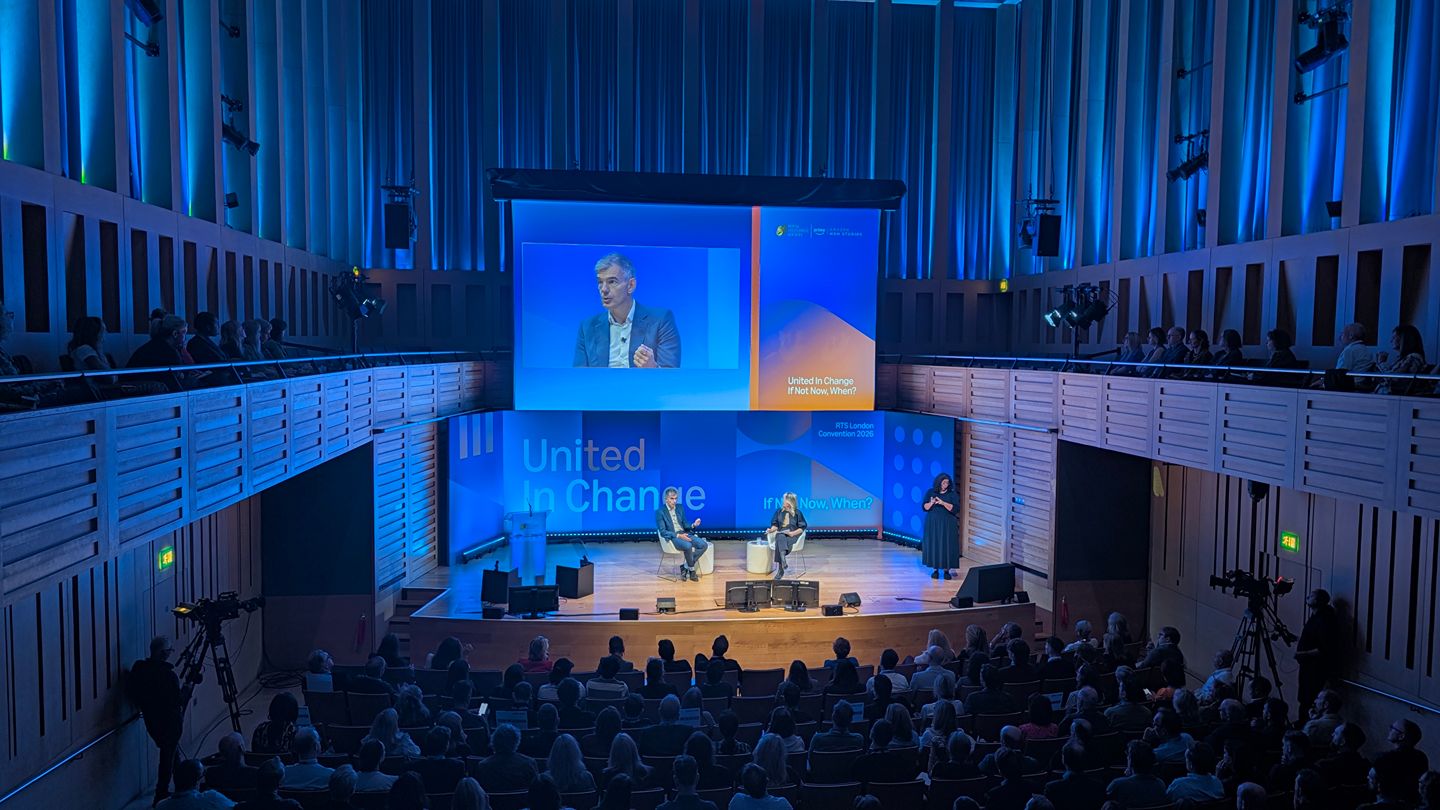
RTS Convention: “The prize for standing still simply isn't an option”
AI was largely sidelined at the annual RTS gathering where the fate of public service media took precedence. Adrian Pennington reports.
.jpg)
.jpg)
.jpg)