.jpg)
IBC2026 session report: The Women’s Super League’s (WSL) rapid growth globally is forcing the organisation to rethink how it distributes and commercialises its content, said Zarah Al‑Kudcy, Chief Revenue Officer, WSL.
Speaking at the IBC conference The New Playbook for Sports: AI, data, fans and rights Al‑Kudcy outlined how the league operates with full autonomy while serving its 26 professional clubs across the WSL, Championship, and FA Cup competitions.
“Everything we do, we operate for them. Fundamentally, we have to think like a commercial company.” The league now manages 390 matches per season, requiring new efficiencies in scheduling, regulation, and content production.
The WSL has just completed its first domestic rights cycle and launched a new US partnership with CBS, adding to distribution in around 100 markets. But Al‑Kudcy said the league is also prepared to take unconventional routes – including its headline‑grabbing new deal in Spain.
This season, Spain’s rights were acquired not by a broadcaster, but by Alexia Putellas, the two‑time Ballon d’Or winner who recently joined the WSL. Putellas’ agency will operate a dedicated YouTube channel carrying live matches and shoulder content.
“Women’s sport tends to be innovative because it has to be,” Al‑Kudcy said. “We didn’t want to restrict ourselves to one match a week and blackout the other six. With Alexia’s global profile, this was the right test.”
The WSL’s own YouTube channel has grown to 400,000 subscribers, but Al‑Kudcy said Spanish‑language coverage was essential. “We’re a player‑led league,” she said. “Alexia wants to grow the game globally, not just domestically.”
Talent‑representation agencies bring marketing, influencer reach, and investment that traditional broadcasters often cannot match. “It’s not just about putting the live match on,” she said. “You need someone who will invest in all the shoulder content. That’s what makes this model exciting.”
.jpg)
Call my agent: Agentic AI begins buying media advertising
AI agents have the potential to automate media transactions at scale, but today’s focus is less about fully autonomous workflows and more on experimentation and efficiencies.
.jpg)
NAB Show New York: The stakes could not be higher
As media, technology, and politics become increasingly intertwined, the stakes extend far beyond the balance sheet.
.jpg)
6G-Holonet: Bringing Star Trek’s comms system to reality
As the 6G-Holonet project sets its sights on live entertainment, cultural heritage sites, and immersive media, Alex Buchan, Chief Technology Officer, DTG, reveals the key technological considerations that have ensured the project’s impact.
.jpg)
ULL-timate goal: How streamers are prioritising ultra-low latency
With audiences expecting instant global information, and broadcasters competing against social platforms that deliver clips within seconds, the race is on to deliver ultra-low latency (ULL) as a competitive edge.
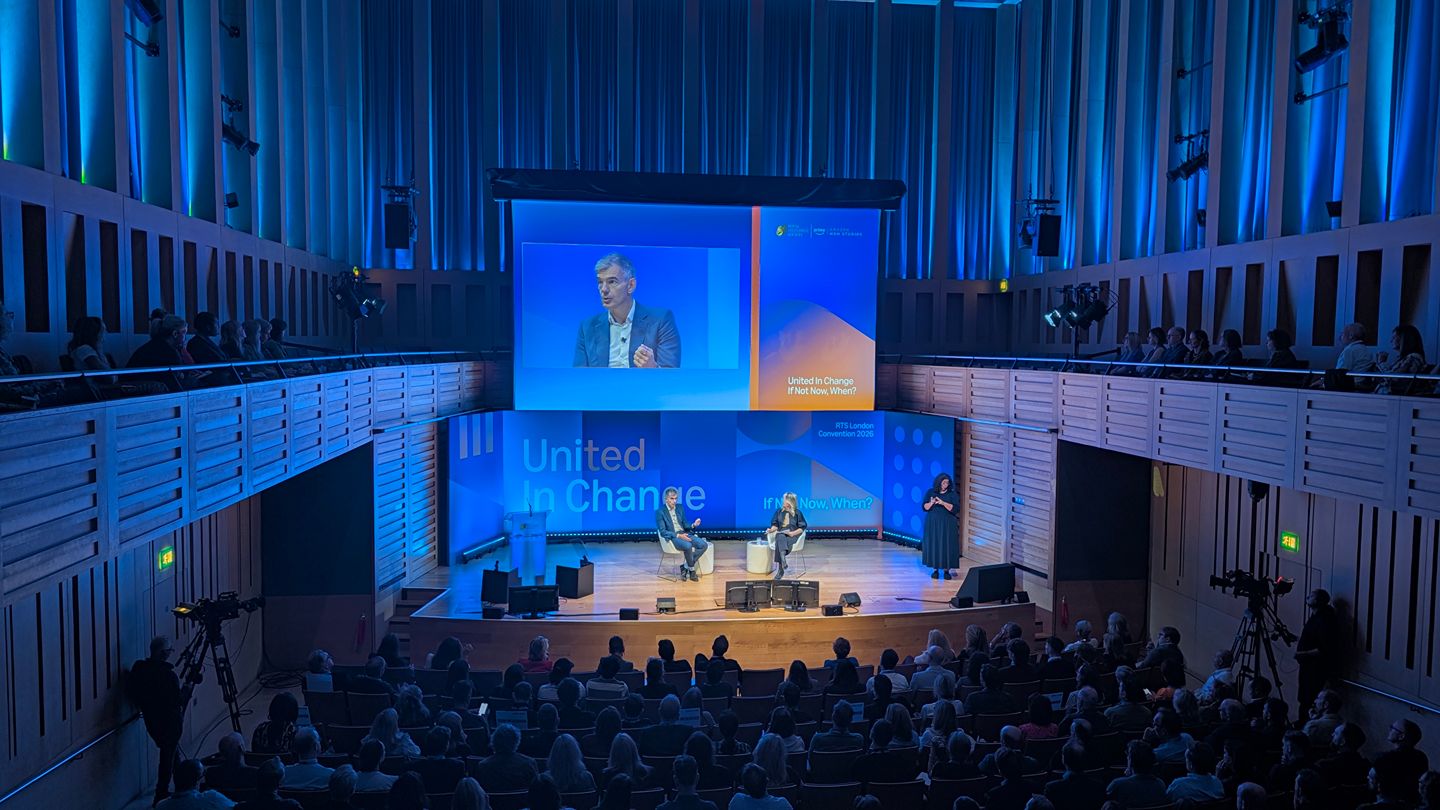
RTS Convention: “The prize for standing still simply isn't an option”
AI was largely sidelined at the annual RTS gathering where the fate of public service media took precedence. Adrian Pennington reports.
.jpg)
.jpg)